A handheld steamer can smooth a shirt before work, freshen a dress between trips, and help relax wrinkles without setting up an ironing board. But the best choice depends on more than a quick heat-up claim: tank capacity, weight, steam output, and fabric guidance all affect how useful a steamer feels in daily life. This guide compares five popular options for home and travel, with practical notes on what each does well and where it falls short.
Use the comparison to narrow down the best handheld clothes steamer for your routine, whether you need a compact travel companion or a more capable tool for regular garment care. Specifications can vary by region and product revision, so confirm the details on the manufacturer’s current listing before buying.
How to Choose the Best Handheld Clothes Steamer
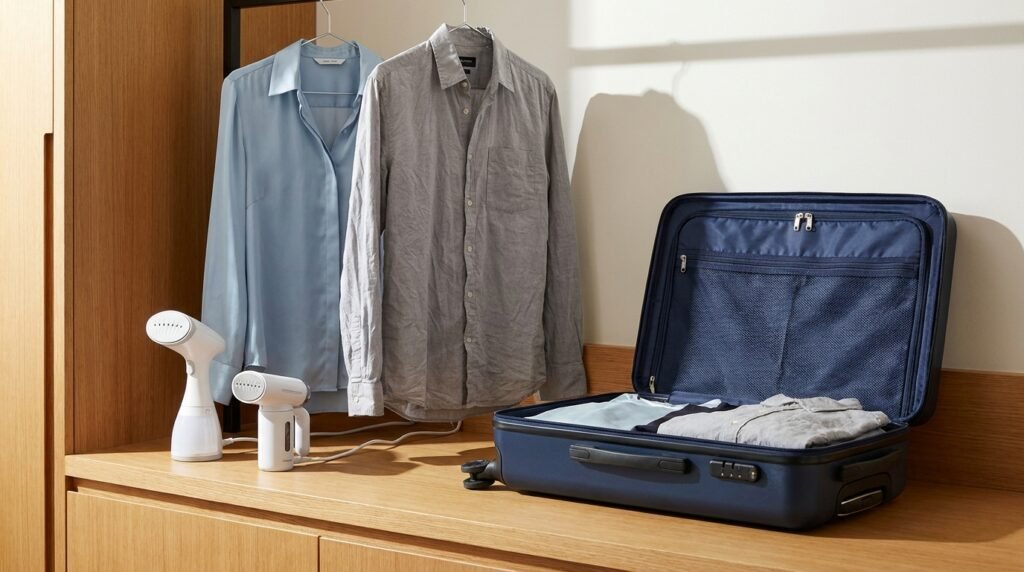
Handheld steamers are designed for quick garment care, but they do not all solve the same problem. A lightweight model with a small reservoir is easy to pack and retrieve for one or two items. A larger, more powerful unit is often more convenient for several garments at home, but it can feel tiring to hold and take up more storage space. Start with the number of garments you usually steam in one session, then weigh capacity against portability.
Heat-up time matters when you are getting dressed in a hurry. Many modern handheld models advertise a warm-up of roughly half a minute to under a minute, while some heavier-duty designs take longer. Treat that figure as one part of the decision, not a guarantee of instant results: a steamer may be ready to produce steam quickly but still need a few passes to relax a deep crease. Continuous steam strength, a useful soleplate or attachment, and a comfortable grip can matter just as much.
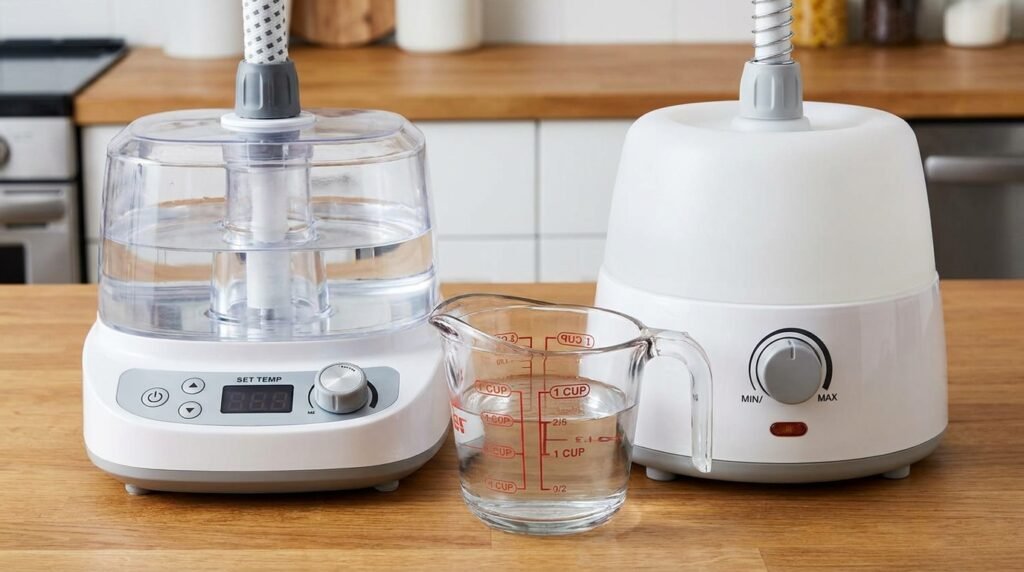
Tank capacity determines how often you pause to refill. A compact reservoir around 120 milliliters is convenient for occasional touch-ups, but it may require a refill if you are steaming multiple outfits. Larger tanks can reduce interruptions, though a full reservoir adds weight. Consider whether the tank detaches, whether its opening is easy to fill, and whether the unit can be stored safely after use. Never top up a hot steamer unless the manufacturer’s instructions specifically permit it.
Fabric compatibility is another essential filter. Steam can work well on many washable, steam-safe materials, including cotton blends, polyester, and some synthetics. Delicate fabrics need greater care. Silk, velvet, wool, and garments with trims or coatings may require a low setting, a protective attachment, or a different cleaning method. Always check the garment’s care label and the steamer manual. The FTC’s clothing care labeling guidance explains why labels are useful when deciding how to treat a garment.
For this wrinkle remover comparison, the most useful measures are practical: time to readiness, how much water the reservoir holds, how manageable the steamer feels, and whether it has settings or accessories that suit your fabrics. Also think about where you will use it. A small apartment may benefit from a compact body and simple storage, while a frequent traveler should prioritize a manageable footprint, a secure water tank, and compatibility with the destination’s electrical system. Check voltage requirements before packing any powered appliance abroad.
- For occasional use: Favor a light unit that fills easily and heats up quickly.
- For several garments: Look for a larger reservoir and comfortable handling.
- For delicate clothing: Prioritize controlled settings and follow both care labels and manual instructions.
- For travel: Compare folded or compact dimensions, weight, voltage, and leak precautions.
With those trade-offs in mind, the picks below are not ranked as if one model suits everyone. They represent different priorities: home performance, travel convenience, and a balance between the two.
Five Handheld Steamer Picks Compared for Home Use
The models below illustrate how handheld steamers trade off speed, tank size, and handling. Product specifications can change, and names may cover more than one regional version. Check the exact model number and current manufacturer’s documentation before relying on a measurement. The table is a practical shortlist rather than a promise that every version has identical accessories or settings.
| Model | Warm-up | Water capacity | Best fit | Main compromise |
|---|---|---|---|---|
| Conair Turbo ExtremeSteam GS59X | About 40 seconds, depending on version | About 7.3 oz / 215 ml | Home touch-ups and several items | Bulkier than travel-first designs |
| Rowenta X-Cel Steam+ DR8270 | About 25 seconds, depending on version | About 6.4 oz / 190 ml | Fast, frequent garment care | Still requires refills for larger loads |
| Philips 3000 Series STH3020 | About 30 seconds | About 120 ml | Compact storage and travel | Smaller tank limits long sessions |
| Jiffy ESTEAM | Allow longer warm-up; verify the model manual | About 8 oz / 237 ml | Durable, straightforward steaming | Less compact and less feature-rich |
| Conair Handheld Turbo ExtremeSteam, compact variants | Varies by model | Varies by model | Shoppers comparing lower-cost options | Confirm exact specs and attachments |
Conair Turbo ExtremeSteam GS59X: A home-oriented all-rounder
The GS59X is appealing if you want a handheld model with more water on board than many travel-sized units. Its advertised tank capacity is around 7.3 ounces, which can mean fewer refill breaks when refreshing a few shirts or a dress. Its relatively quick advertised warm-up also makes it convenient for spontaneous use. For a household that wants a steamer ready between laundry days, the balance of capacity and speed is a sensible one.
The drawbacks are familiar for a larger handheld: it is not as easy to tuck into a small suitcase, and a fuller tank can make prolonged overhead steaming tiring. It is not the ideal buy if you only need the lightest possible option or want a compact device for a single emergency touch-up. Before purchase, check whether the exact GS59X package includes the attachments you want; bundles and availability can differ.
Rowenta X-Cel Steam+ DR8270: Quick readiness for regular use
Rowenta’s X-Cel Steam+ is a strong candidate for people who value a short wait before starting. Manufacturer listings commonly give a warm-up around 25 seconds and a reservoir around 6.4 ounces, though the current regional specification should take precedence. The combination suits morning touch-ups, work clothes, and small batches of laundry. It can also be easier to manage than a bulkier device when you want to steam a garment while it hangs.
Its capacity is useful but not unlimited, so steaming a family-sized pile may involve refills. It is also not a substitute for an ironing station when crisp creases or a sharply pressed finish matter. People who travel with only a small personal bag may prefer a folding model instead. In garment steamer reviews, speed can look decisive; in practice, tank ergonomics and comfort over several minutes deserve equal attention.
Jiffy ESTEAM: A simpler option for dependable routines
The Jiffy ESTEAM takes a more straightforward approach, with a comparatively generous reservoir for a handheld design and a reputation for a durable, uncomplicated build. It may suit someone who wants a dedicated garment-care tool rather than a folding gadget. Its larger water capacity can be useful for repeated home sessions.
However, its shape and overall feel are less travel-focused than a folding compact steamer, and buyers should check the current manual for precise warm-up and operating guidance. Skip it if you want lots of delicate-fabric controls, the smallest packed footprint, or a very light tool for occasional use. These comparisons show why the best handheld clothes steamer is the one whose capacity and handling match your actual routine—not simply the model with the biggest headline number.
Best Compact Options for Travel and Small Spaces
Travel steamers need to earn their place in a suitcase. A compact shape is helpful, but a good travel pick also needs a reservoir that is easy to empty, controls that are simple to understand, and handling that does not turn a quick shirt refresh into a chore. The Philips 3000 Series STH3020 is one of the clearest examples of the compact-first approach. Its foldable design is intended to reduce storage demands, and Philips lists a reservoir around 120 milliliters with a warm-up of about 30 seconds for this series. Confirm the exact model and regional version before purchase.
The small tank is a genuine advantage when packing, but it is also the main limitation. It is best for a blouse, shirt, or a couple of light garments—not a large laundry basket. A compact steamer may also have less room for a broad steaming head than a home-oriented model, so covering wide panels can take more passes. If your usual travel routine involves multiple outfits, compare the tank size with the weight and dimensions rather than choosing on foldability alone.
For a versatile home-and-travel middle ground, the Rowenta X-Cel Steam+ can be more appropriate than the smallest folding models. Its tank is larger than the Philips compact reservoir, and its quick warm-up is convenient in a hotel room or at home. The trade-off is a less space-efficient body. A Conair GS59X can also work for occasional trips if your luggage has room, but it is better understood as a home steamer that can travel, not a dedicated carry-on companion.
Before packing any steamer, allow it to cool completely, empty the tank, and follow the maker’s storage directions. Residual water can leak in a bag, and a hot soleplate or steam head can damage fabric or other belongings. Check the electrical rating for your destination. A plug adapter changes the plug shape, not the appliance’s voltage; use only a compatible power solution approved for the device.
For more packing ideas beyond garment care, see this guide to useful travel accessories for an organized trip. It can help you think about how a steamer fits alongside chargers, organizers, and other items competing for limited luggage space.
- Choose Philips 3000 Series if foldable storage and light touch-ups are your main priorities.
- Choose Rowenta X-Cel Steam+ if you want a larger reservoir and expect to use the steamer at home too.
- Choose a compact Conair variant only after verifying its tank, weight, and dimensions, since similar names can refer to different configurations.
- Choose no handheld steamer if you need sharp trouser creases, large-volume pressing, or a tool specifically certified for a special fabric-care process.
The most reliable garment steamer reviews acknowledge that travel convenience involves compromises. A smaller unit is easier to store, but generally asks for more frequent refills. A larger unit may finish several garments in one session, but can take up space and feel heavy at arm’s length. If travel is occasional, buying a home model that fits your storage space may be more sensible than paying for compactness you rarely use. If you fly often, prioritize safe packing and verified electrical compatibility over a long list of accessories.
Also consider your accommodation. Some rooms have limited outlets or no convenient place to hang clothing. A steamer is easiest to use when you can hang the garment securely, keep the cord away from water, and work with enough clearance around the fabric. If those conditions are not available, a travel iron or wrinkle-release product may be more practical for that particular trip.
Fabric Compatibility: What Steamers Can and Cannot Do
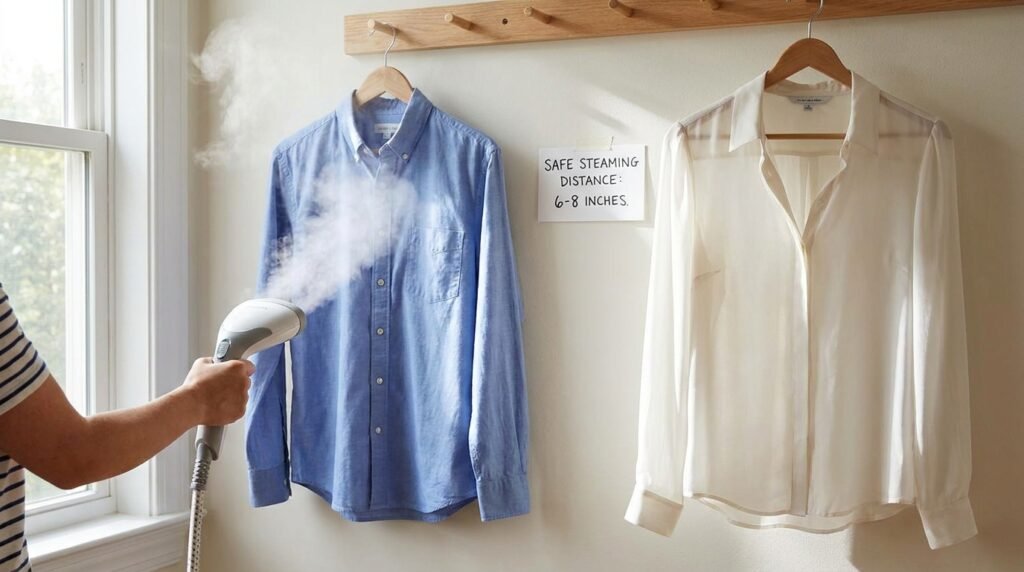
Steam relaxes fibers and can reduce the appearance of creases, but it is not a universal treatment for every textile. Read the garment care label first, then consult the steamer’s manual for fabric-specific instructions. A steamer’s settings and included attachments matter because they influence how close the head can be held to clothing and how much heat reaches the surface. When in doubt, test an inconspicuous area or use a professional cleaner’s advice rather than assuming that a handheld device is safe for every item.
Cotton and many cotton blends often respond well to steady steam, especially when the garment is hanging freely and the fabric is pulled gently taut. Polyester and common synthetic blends can also be suitable, but they may be sensitive to direct contact or excess heat. Move the steamer steadily instead of holding it in one place. For heavier fabrics, several slow passes may be more effective than rushing over the surface. A handheld steamer can soften wrinkles, but it will not always produce the sharp, flat finish of a carefully pressed iron.
Delicate items call for restraint. Silk may be vulnerable to water spotting or heat, while velvet and pile fabrics can show marks if pressed or brushed the wrong way. Wool may be steamable under the garment’s care instructions, but avoid saturating it. Be especially cautious with sequins, beads, glued details, coated textiles, and fabric blends where the care label gives restrictions. Do not use steam on a material simply because it appears sturdy; linings, trims, and surface finishes can behave differently from the main fabric.
A wrinkle remover comparison should distinguish steamers from sprays and irons. A steamer is convenient for hanging garments and quick refreshes, but an iron offers more direct pressure for crisp edges and stubborn creases. Wrinkle-release sprays can be easier to pack, but their formulas may not suit every fabric and they do not deliver the same heat-based treatment. No method sanitizes or cleans clothing automatically just because it reduces wrinkles. Follow the care label for washing and cleaning, and use steam only for its intended garment-care purpose.
For a safer routine, fill the reservoir with the type of water recommended by the manufacturer. Some makers specify tap water, while others advise distilled or demineralized water in hard-water areas. Water guidance differs, and using the wrong type can affect mineral buildup or product performance. Keep the steamer upright when instructed, use any fabric brush or delicate attachment as directed, and avoid aiming steam at your hands, face, or another person. Steam can cause burns even when it is not immediately visible.
These basics apply across the best handheld clothes steamer picks, but the exact compatibility list belongs to the garment label and product manual. If your wardrobe includes delicate or valuable pieces, choose a model with clear controls and useful guidance, and be willing to use another care method when appropriate. For everyday shirts and casual clothing, a simple unit may be enough. For mixed wardrobes, patience and fabric knowledge matter more than an impressive power rating.
Buying Advice, Maintenance, and the Final Comparison
To make a final choice, picture a normal week rather than an idealized one. If you steam one shirt before leaving home, a compact device that heats quickly may be all you need. If you refresh several work outfits on laundry day, a larger tank and comfortable grip may be more valuable than a folding body. For a mixed wardrobe, controls and instructions that make it easy to use a cautious approach can be more useful than extra power. A feature matters only when it improves the way you will actually use the appliance.
There are clear reasons to choose each model. The Conair GS59X balances a reasonably quick start with a larger tank and suits regular home touch-ups. Rowenta’s X-Cel Steam+ is attractive for people who want fast readiness and a useful middle-ground reservoir. Philips’ STH3020 emphasizes compact, foldable storage and suits occasional use in smaller spaces or on trips. Jiffy ESTEAM favors a more straightforward, capacity-minded home routine. A smaller Conair variant can be a budget-oriented alternative, but exact specifications depend on the specific model, so compare the label rather than relying on a similar product name.
Every option has a reason to buy something else instead. Skip the larger Conair if its bulk is a nuisance or you only need a one-shirt travel tool. Skip the Rowenta if the price position or body size is not justified by your use, or if you expect to press crisp creases. Skip the Philips if frequent refills would frustrate you. Skip Jiffy if you want a foldable design, multiple delicate settings, or the lightest possible grip. Skip any handheld steamer if you need high-volume garment finishing; an iron or upright steamer may suit that workload better.
Maintenance is simple but important. Empty the reservoir after use if the manual recommends it, let the appliance cool before storage, and follow the maker’s descaling instructions. Do not scrape mineral deposits with a sharp object or add cleaning chemicals unless the manufacturer explicitly approves them. Inspect the cord and plug periodically, and stop using the steamer if parts are damaged or it behaves unexpectedly. Store it where it can dry fully and where children cannot reach the hot head or cord.
For shoppers considering other home appliances, the same practical approach applies: match the product to its setting, not just its feature list. For example, compare quiet operation, placement, and room size when choosing among quiet ceramic space heaters for a bedroom. That sort of use-case thinking helps prevent buying features you will not use.
Overall, the best handheld clothes steamer for most home routines is likely to be a model with a comfortable grip, easy filling, and enough capacity for your typical session. For travel, compactness can take priority, provided you accept a smaller tank and verify electrical compatibility. Use the comparison table as a starting point, then confirm current specifications, included accessories, and care instructions on the manufacturer’s product page.
For independent testing and further reading, see Wirecutter.
Frequently Asked Questions
How fast should a handheld clothes steamer heat up?
Many current handheld models advertise warm-up times of around 25 to 40 seconds, although the figure varies by model and measurement conditions. A quick warm-up helps with last-minute touch-ups, but it does not guarantee that every wrinkle disappears in one pass. Fabric weight, crease depth, steam output, and your technique all affect the result. Check the exact model’s manual and allow the appliance to reach its ready state before use.
Is a larger water tank always better?
No. A larger reservoir usually means fewer refill breaks, which is helpful for steaming several garments at home. It can also add weight and make a steamer less convenient to carry or hold overhead. A small tank may be ideal for occasional travel use, while a larger one suits longer sessions. Choose capacity according to the number of items you normally steam at once.
Can I use a handheld steamer on silk or wool?
It depends on the garment’s care label and the steamer manufacturer’s instructions. Silk can be sensitive to moisture and heat, and wool should not be saturated. If steaming is allowed, use the recommended setting and attachment, keep the head moving, and test an inconspicuous area when possible. For valuable or particularly delicate clothing, professional care may be the safer choice.
Is a garment steamer better than an iron?
They serve different purposes. A steamer is convenient for hanging garments and quick wrinkle reduction, especially when you do not want to set up an ironing board. An iron applies pressure and is generally better for sharp creases and a crisp finish. In a wrinkle remover comparison, neither tool wins for every task: choose based on the finish you want and the fabrics you own.
What should I check before taking a steamer abroad?
Check the appliance’s voltage and frequency rating against the destination’s electrical supply. A plug adapter does not convert voltage. Also confirm the airline’s rules for packing the appliance, empty and cool the water tank, and store the unit according to its manual. If voltage compatibility is unclear, contact the manufacturer rather than risking damage or an unsafe connection.
How often should I descale a handheld steamer?
Follow the product manual, because water hardness and recommended cleaning routines differ. Some manufacturers provide a specific descaling procedure, while others caution against particular cleaning agents. Using the recommended water type and emptying the tank as directed can help limit residue. Never open or clean a hot appliance, and do not improvise with vinegar or chemicals unless the maker says they are safe.
Conclusion: Match the Steamer to Your Routine
For regular home use, compare capacity and comfort first; for travel, prioritize compact storage and electrical compatibility. The Philips 3000 Series is a compact option, while the Conair GS59X and Rowenta X-Cel Steam+ offer more capacity for home touch-ups. Check current specifications and fabric guidance before deciding. Compare the picks, consider what you steam most, and choose the model that makes wrinkle care straightforward for you.