
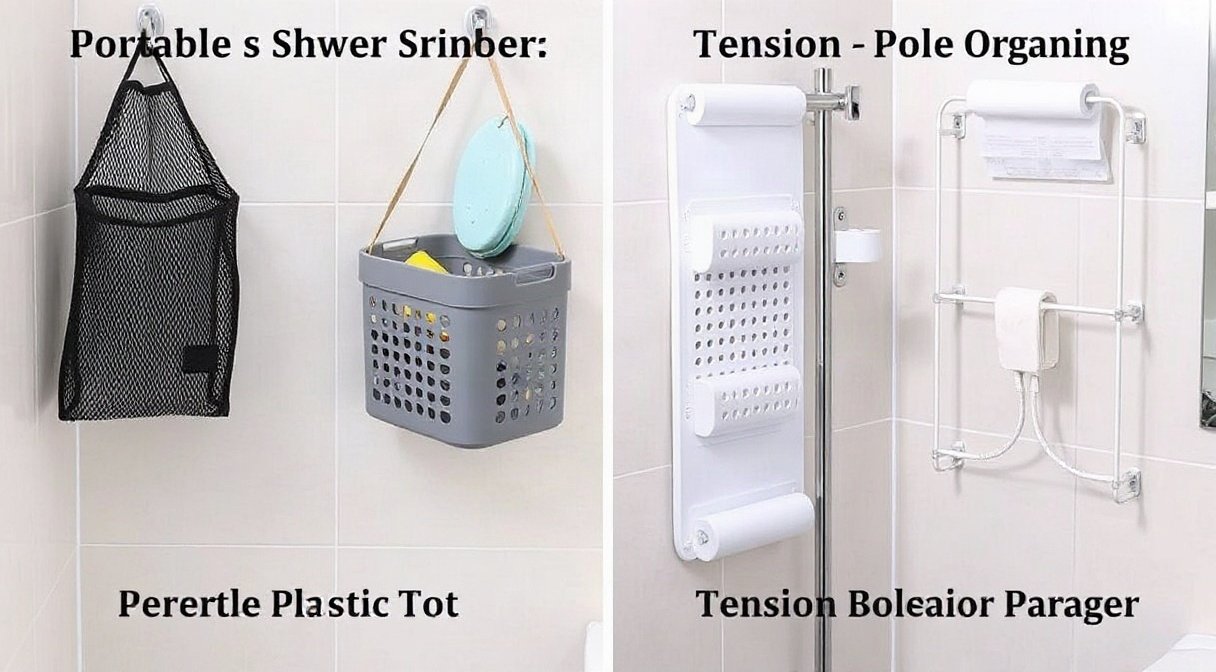
Shared dorm showers reward smart packing: your caddy needs to carry daily essentials, drain quickly, and make the walk back to your room manageable. The best shower caddy for college depends on whether you value portability or want a rack that stays put in a cramped bathroom.
This guide compares portable mesh and plastic options with installable adhesive and tension-pole designs. It also explains how to assess materials, drainage, and mounting limitations, so you can choose practical dorm bathroom organization without bringing home a rust-prone or awkward-to-carry setup.
How to Choose the Best Shower Caddy for College
Start with the distance between your room and the shower. If you cross a hallway or use a communal bathroom, a caddy that can be lifted, carried, and hung from a hook is usually more convenient than a permanent rack. If you share a bathroom with only a few roommates, an installed organizer may free up counter space and keep frequently used products in one place. The best shower caddy for college is the one that suits your actual routine, not the one with the most pockets or shelves.
Next, measure the space and check the rules. Dorms may prohibit drilling, suction attachments, or fixtures that could mark tile. A shower caddy that fits a home bathroom might also block a shared shower’s controls or leave too little room for other students. Before buying a mounted design, ask housing staff what attachment methods are allowed. For a portable carrier, check whether it can hang from the available shower hooks and whether its base fits your room’s storage shelf.
For rust resistance, assess every metal component—not just the main frame. Coated steel can look sturdy, but a scratch or chipped finish may expose the metal beneath. Stainless steel is a sensible option, but the grade and construction matter, and even stainless steel benefits from rinsing and drying. Mesh, molded plastic, and silicone avoid the same kind of metal rust, though they still need cleaning and air circulation. Prioritize rustproof shower storage with clear material details rather than relying on a vague rust-resistant label.
Drainage matters just as much as material. Open mesh, slotted shelves, and perforated bases let water escape more readily than solid, deep containers. Standing water can leave residue, keep toiletries wet, and make a damp caddy unpleasant to carry. Look for openings that are large enough to drain but small enough to support the bottles you use. Avoid overloading a compact caddy until it tips or stretches out of shape.
Finally, think through moving day. Students often carry belongings between home and campus, so a lightweight organizer that folds, nests, or packs flat may be more practical than a rigid rack. Consider whether the caddy can be emptied quickly, whether it has a comfortable handle, and whether the mounting parts can be stored without getting lost. If you are planning broader dorm bathroom organization, our guide to compact storage ideas for small living spaces offers useful ways to make limited room work harder.
In short, compare fit, drainage, materials, and move-out convenience before comparing appearance. Those checks reveal whether a portable carrier or an installable organizer is the better match for your shared setup.
Portable Picks: Mesh Bags and Shower Totes
Portable caddies suit students who travel to a communal shower, share a bathroom with changing schedules, or need to carry toiletries home during breaks. They keep personal items together without claiming permanent space on a shared wall. A good option should stay upright when loaded, offer a secure carrying point, and dry between uses. The best shower caddy for college in this category is not necessarily the largest; oversized bags can become heavy and take longer to dry.
Mesh hanging caddy: light and quick to drain
A mesh carrier typically has several pockets, a central compartment, and handles or a hook. Its biggest strengths are low weight and airflow. Water can drain through the sides and base, so it is easy to carry back to a room and hang up to dry. Mesh also avoids rust on the body itself, although any attached metal hook or zipper pull should still be checked for corrosion resistance.
The trade-offs are structure and support. Soft mesh may sag under large shampoo bottles, and narrow pockets may not fit bulky containers. A bag that hangs from a showerhead can slip or crowd the fixture, while an exposed hook may feel awkward on a long walk. This is a strong choice for students who pack a modest routine and can hang the caddy somewhere ventilated afterward. It is not ideal for anyone carrying heavy bottles, needing rigid shelves, or sharing a shower with nowhere suitable to hang belongings.
Plastic shower tote: sturdy, simple, and easy to wipe
A molded plastic tote has a firm handle and open compartments that make it easy to grab, set down, and clean. Perforations or a slotted base help water escape, and plastic will not rust like an exposed metal frame. This format can also hold items that would flop around in a soft bag. It is often the straightforward, entry-level choice for students who prefer a simple carrier over a rack that has to be mounted.
Its drawbacks are bulk and trapped moisture. A tote with a solid base may collect water, so check for generous drainage holes and empty it after each shower. Hard edges can make it less comfortable to carry when full, and a rigid body may take up more room in a suitcase than foldable mesh. It is not the best choice for a student with very limited room storage or a long walk who needs an especially light load.
For either portable style, test the handle and inspect the seams, stitching, and drainage openings. Put only daily essentials in the caddy; refill larger bottles in your room instead of hauling them back and forth. A separate small pouch for clean items can also keep the carrier easier to rinse and dry. If a retailer does not show the base clearly, do not assume it drains well.
Portability makes these designs useful for dorm bathroom organization, but it also means the caddy visits wet floors and shared hooks. Rinse it regularly, avoid leaving it in a puddle, and let it dry fully before packing it for a trip home. Choose mesh for lightness and airflow, or plastic for firmer support and easy wiping.
Installable Options: Adhesive Racks and Tension Poles
Installable caddies are best for students who want products off the shower floor and do not need to carry their organizer to a communal bathroom. They can keep shampoo and soap within reach, reduce countertop clutter, and give roommates a shared place to store essentials. But mounting style, bathroom rules, and material quality are decisive. Before choosing the best shower caddy for college in this category, confirm what the dorm permits and what the shower walls can support.
Adhesive corner rack: space-saving with surface limits
An adhesive rack uses pads or strips to attach shelves to a wall. A corner model can make use of otherwise wasted space, and open-wire or perforated shelves tend to drain more freely than enclosed baskets. Because the organizer stays in place, it can be a convenient home for products used by several roommates. Some models use plastic; others combine coated or stainless metal with plastic mounting components, so inspect the complete material list rather than judging only the visible shelf.
Its weak point is that adhesion depends on surface condition and installation. Damp, textured, dusty, or uneven tile may prevent a secure bond. Installation may require cleaning the wall and waiting before loading the shelf, and removal can leave residue or damage a finish. Never hang a heavy collection of bottles until the attachment has set according to its instructions. This design is not for students who are forbidden to attach fixtures, live in a bathroom with unsuitable walls, or need to take their toiletries to another shower.
Tension-pole caddy: adjustable storage without drilling
A tension pole uses pressure between the floor and ceiling to support several baskets. It can offer more capacity than a single wall shelf and lets roommates arrange products at different heights. Since it does not require drilling, it may be acceptable where permanent hardware is restricted, although dorm rules should still be checked. Look for adjustable shelves with drainage openings and a pole material that will tolerate repeated moisture.
Installation and stability are the compromises. A pole needs adequate height and a reasonably suitable ceiling and floor; sloped surfaces or an awkward shower layout can make setup unreliable. It takes longer to assemble than a tote and can be inconvenient to remove when moving out. Metal parts may corrode if their finish is damaged, and tension mechanisms may loosen over time, so follow the manufacturer’s fitting and inspection instructions. It is not for students who want a lightweight carrier or cannot spare vertical floor space.
Whichever mounted style you consider, check written load limits and follow the maker’s instructions. A rack overloaded with large bottles can fail, creating a mess or damaging a surface. The EPA guide to mold, moisture, and home care explains why managing persistent dampness matters. Leave airflow around stored items and avoid treating an organizer as a substitute for cleaning or ventilation.
Installable caddies work best when roommates agree on shelf assignments and the setup can remain in place. They are less portable than bags and totes, but can provide tidier shared storage when mounting is allowed and the bathroom has a compatible layout.
Compare the Caddy Types for Rust, Drainage, and Portability
There is no universal winner: the best format depends on who carries the caddy, how wet it stays, and whether the bathroom allows a fixed organizer. Use the table as a shortlist rather than a promise about a particular product. Construction varies between brands and models, so verify the current product description, drainage design, and installation guide before ordering.
| Type | Rust considerations | Drainage outlook | Portability | Best fit |
|---|---|---|---|---|
| Mesh hanging bag | Body avoids metal rust; inspect hooks and hardware | Usually fast through mesh | High; light and often foldable | Communal showers and short trips |
| Perforated plastic tote | Plastic body will not rust | Good if base has open holes | Moderate; rigid but easy to carry | Students who want a firm grab-and-go carrier |
| Adhesive corner rack | Depends on shelf and hardware materials | Good with open shelves | Low; stays mounted | Shared bathrooms with suitable surfaces |
| Tension-pole organizer | Check the pole finish and basket materials | Good with slotted baskets | Low to moderate; dismantles for moving | Roommates needing more vertical storage |
For rustproof shower storage, distinguish rust prevention from water resistance. Plastic and mesh do not rust as materials, but their hooks, eyelets, frames, and fasteners might. A coated metal rack may resist corrosion while its finish is intact, but damage can expose the underlying metal. A stainless label is helpful only when the seller identifies the material clearly; ask about the grade or consult the manufacturer’s documentation if the information is incomplete. The Australian Stainless Steel Development Association’s corrosion-resistance guidance provides background on how conditions and material selection affect corrosion.
Drainage depends on both openings and how a caddy sits. A mesh bag can drain well but hold water in a folded bottom if it is left crumpled. A tote with only a few tiny holes may drain more slowly than one with a broad slotted base. Shelves mounted flat against a wall can also retain water around corners. Look for open construction, a base that does not seal against the floor, and enough spacing for air to move around containers.
Use this quick decision process:
- If you carry products to a shared shower, shortlist mesh or plastic portable styles.
- If you need a fixed home for toiletries, check dorm rules and compare adhesive racks with tension poles.
- Reject designs with unclear materials, blocked drainage, or no usable load guidance.
- Consider how easily the caddy can be cleaned, dried, and packed for breaks.
Portability also affects how much you should store. A compact carrier encourages students to bring only what they use, while an installed organizer can invite roommates to accumulate duplicate bottles. Choose the smallest capacity that safely holds your routine. For more ideas on keeping a compact room orderly, browse our guide to small-space storage solutions.
Think of the table as a comparison of formats, not a ranking of every item on the market. The best shower caddy for college is the one whose construction, drainage, and carrying method match the actual shower and your move-in routine.
Care, Setup, and Moving Between Home and Campus
A well-chosen caddy still needs sensible care. Shared bathrooms expose organizers to splashes, soap residue, and frequent handling, so build a quick rinse-and-dry routine into your week. Empty the caddy after showering when possible, especially if it has a deep base or dense pockets. Put it somewhere with airflow rather than leaving it on a wet floor or inside a closed, damp bag. These small habits help limit residue and odor, regardless of whether the carrier is mesh, plastic, or metal.
For metal components, inspect joints, hooks, welds, and any scratched coating. Rust may appear first at connections or areas where water sits. Rinse away product residue, dry those points, and stop using a piece if corrosion compromises its stability. Do not assume a shiny finish guarantees lasting rust resistance. For a plastic carrier, check the handle and corners for cracks; for mesh, look at seams and stretched pockets. Replace a damaged caddy rather than trusting a failing handle with heavy bottles.
Set up an installable organizer carefully. Clean and dry the intended surface before applying adhesive, then observe the maker’s waiting period and load instructions. Avoid attaching a rack over a seam, textured tile, or a surface the instructions exclude. For tension poles, verify the ceiling and floor contact points, tighten the mechanism as directed, and check stability before loading. Dorm rules take precedence over convenience: do not drill or attach hardware if housing staff prohibit it.
Moving between campus and home is easier when you plan for the caddy to be packed dry. Portable bags can fold flat, while rigid totes can be filled with light toiletries or stored inside a larger suitcase. Remove loose hooks and small parts and put them in a labeled pouch so they do not get misplaced. If you use a mounted rack, empty it, remove it according to its instructions, and clean any residue before checking out. A tension pole may need to be dismantled, so keep its pieces together.
Students who are still deciding how much to carry can start with a small set of daily essentials: cleanser, shampoo, conditioner, and a soap container if needed. Refill travel-size bottles in the room, and avoid storing medicines or valuables in a shared shower. A hook, handle, and one drainage-friendly compartment may matter more than numerous pockets. A streamlined kit is easier to carry, dry, and repack during school breaks.
For shared dorm bathroom organization, agree with roommates about which supplies belong in a common rack and which should travel with each person. Labeling is optional, but keeping personal products in a portable carrier can reduce confusion and free up shared shelf space. If you live in a suite, ask who is responsible for cleaning a permanently installed organizer and how it will be handled at move-out.
Care practices also benefit from broader moisture awareness. Follow cleaning directions for the surface and material, and do not mix cleaning products. The EPA’s guidance is useful for understanding why ventilation and prompt attention to damp areas matter in a bathroom. With a little maintenance, rustproof shower storage can stay more pleasant and dependable throughout the term—and a packable setup can transition back home with less hassle.
Frequently Asked Questions
Is a portable or installable caddy better for a dorm?
Choose portable if you walk to a communal shower, need to keep your toiletries with you, or travel home often. Choose an installable rack if your bathroom is shared by a small group, your housing rules allow it, and you want products stored off the floor. Students who are unsure should start with a portable option because it does not depend on wall surfaces or a fixed layout.
What materials are least likely to rust?
Mesh and plastic bodies do not rust, though attached metal hooks or fasteners still need inspection. Stainless steel is a common rust-conscious choice, but its performance depends on the material grade, construction, and care. Coated steel can be useful, but scratches may expose the metal underneath. Check the complete materials list and dry the caddy regularly.
How can I tell whether a shower caddy drains well?
Look for open mesh, broadly spaced slots, or visible holes in the bottom and sides. Make sure the caddy can sit without sealing its drainage openings against the floor. Product photos should show the base clearly. If it has a removable tray, check whether water can escape when the tray is installed.
Can I use an adhesive caddy in a dorm shower?
Only if housing rules permit it and the wall surface matches the manufacturer’s requirements. Adhesives may not hold well on wet, textured, dusty, or uneven surfaces, and removal can leave residue. Follow the installation and waiting instructions, keep within the stated load guidance, and ask housing staff if you are uncertain.
What is the easiest caddy to take home during breaks?
A lightweight mesh bag is often the easiest to fold and pack. A plastic tote is simple to carry but takes up more space, while tension-pole and adhesive organizers need to be dismantled or removed. Consider how the item dries and where small hardware will be stored before moving day.
How do I prevent a caddy from getting smelly?
Empty standing water, rinse away soap residue, and let the caddy dry completely in a ventilated place. Avoid sealing a wet carrier in luggage or a closed drawer. Clean it according to its material and the maker’s instructions, and inspect seams, joints, and drainage openings during regular use.
Conclusion: Choose for Your Shower Routine
The best shower caddy for college balances daily convenience with the realities of a shared, damp bathroom. Pick a mesh bag or perforated plastic tote if you carry products to the shower and home during breaks. Consider an adhesive rack or tension pole only when your bathroom layout and dorm rules make installation practical.
Prioritize open drainage, clear material information, and a size you can carry without overloading. A little rinsing and drying goes a long way toward keeping your caddy usable through the term. Compare the formats against your routine, confirm the details before buying, and choose the one that makes dorm bathroom organization easier from move-in to move-out.