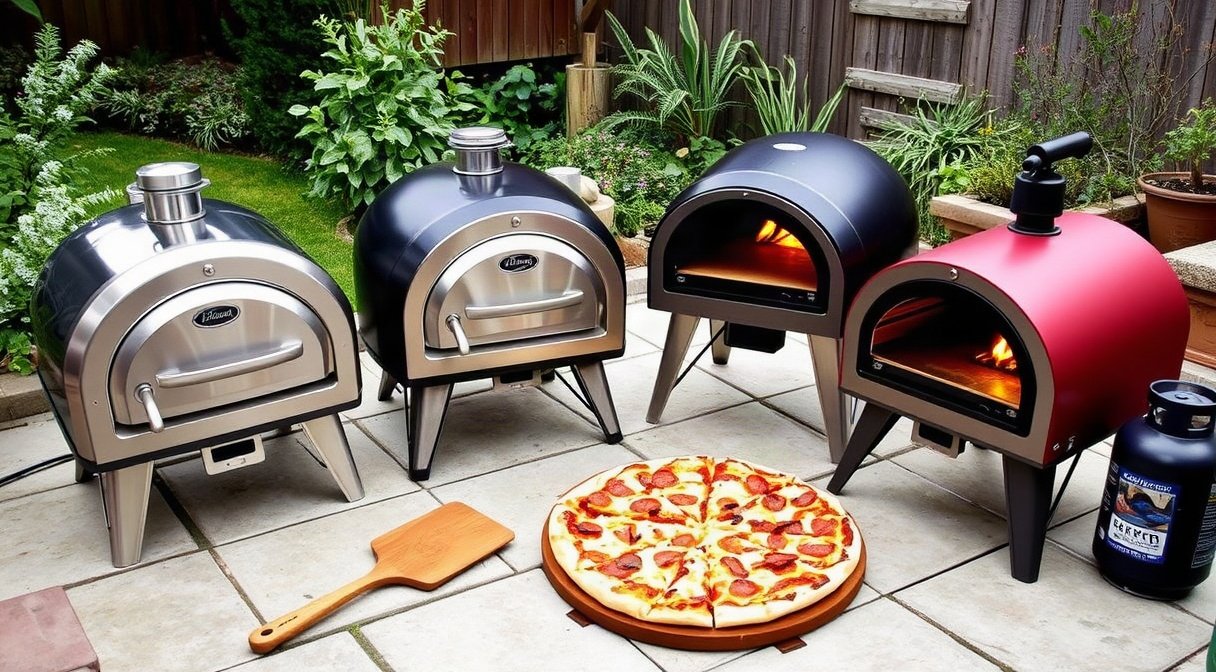
A great backyard pizza night does not require a permanent brick oven, but choosing a portable model means weighing fuel, warm-up time, cooking control, and how much gear you are willing to move and store. This outdoor pizza oven review compares four popular options: Ooni Koda 12, Ooni Karu 12, Gozney Roccbox, and Solo Stove Pi Prime.
Rather than treating every manufacturer claim as a guaranteed result, this guide distinguishes stated heat-up guidance from the real variables that affect cooking: weather, fuel, stone temperature, dough, and operator technique. Use the portable pizza oven comparison and backyard pizza oven buying guide below to match an oven to your space and habits.
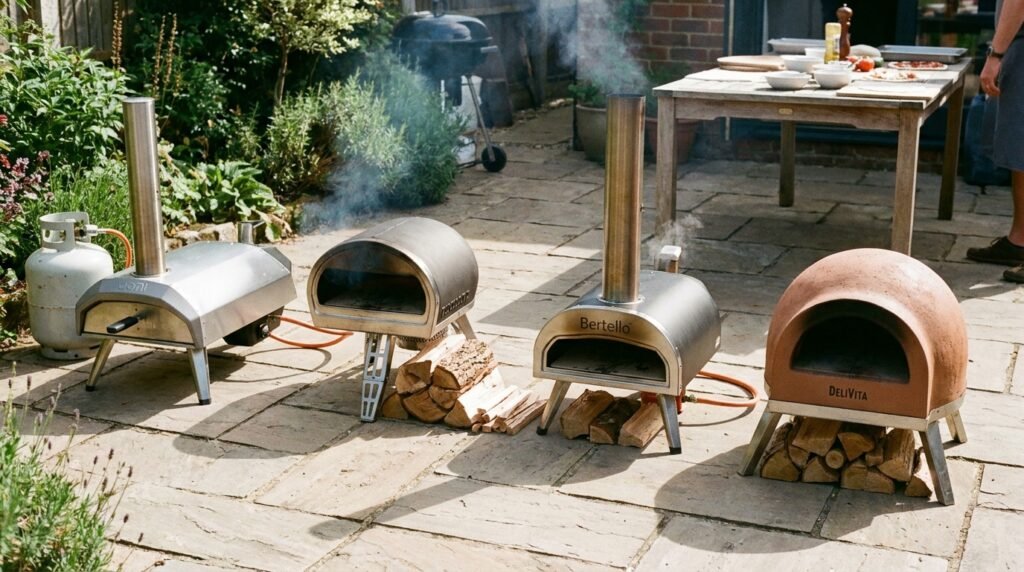
How to Judge an Outdoor Pizza Oven Review
A portable oven’s headline temperature is only part of the story. A model may advertise a stone or chamber temperature close to 900°F, but the useful question is whether it can heat the cooking surface evenly and hold that heat between pizzas. The first pizza may cook quickly while later ones need different timing, especially if the stone has not recovered after a launch. A dependable oven should make it possible to manage those changes without turning dinner into constant guesswork.
Heat-up claims also need context. Manufacturers commonly describe a preheat of roughly 15 to 25 minutes, but the actual wait depends on the oven, fuel, wind, ambient temperature, and the target stone temperature. Treat these figures as a planning range, not a promise. A built-in air thermometer, where present, may not tell you the stone temperature; an infrared thermometer can give a more useful reading at the cooking surface. The stone is what cooks the base, so its readiness matters more than a hot-looking flame.
Fuel changes both the experience and the results. Propane models are generally the simplest to start and adjust: connect a compatible tank, ignite, and use the controls to tune the flame. They suit cooks who value predictable setup and repeatable sessions. Wood and charcoal can add a more involved, traditional fire-management experience, but they require tending, suitable fuel, and a little more practice. Multi-fuel designs offer flexibility, though an optional burner may add to the overall outlay and equipment list.
We also consider the parts that matter once the novelty wears off:
- Cooking control: Can you lower the flame or reposition a pizza to manage a fast-browning rim?
- Portability: Is it practical to lift, store, and set up safely, or merely movable with effort?
- Capacity: Does the opening and stone suit the pizza size you actually make?
- Cleanup: Is the oven easy to brush out, and does its fuel leave ash or residue?
- Value: Do included parts and everyday convenience justify moving up from an entry-level choice?
Pizza quality is not just about reaching a high temperature. A properly heated stone can produce a browned, crisp underside, while strong radiant heat cooks the rim and toppings rapidly. If the top browns before the base is ready, the stone may need more time. If one side chars first, turn the pizza more often and adjust its position. The best portable ovens give a home cook enough control to correct these issues rather than simply running hot.
This is a practical comparison of well-known designs and their stated operating guidance, not a claim that every model has been independently laboratory-tested under identical conditions. For another perspective on choosing an oven, consult Wirecutter’s pizza oven guide, then check each maker’s current instructions for setup, fuel compatibility, and safe clearances.
Gas Favorites: Ooni Koda 12 and Gozney Roccbox
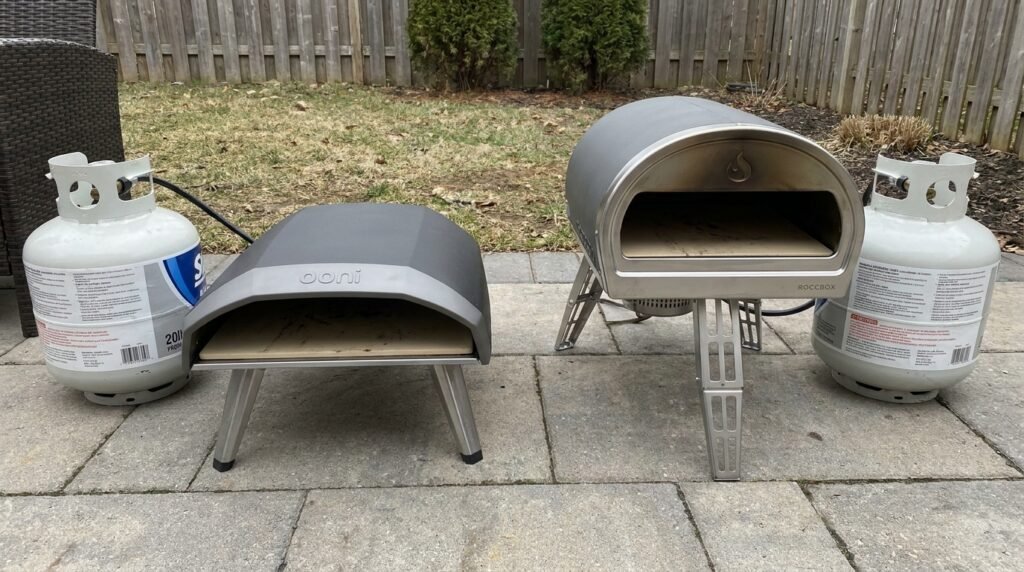
The Ooni Koda 12 is the straightforward choice for cooks who want a compact gas oven without managing a live wood fire. It runs on propane, lights quickly, and offers a controllable flame. Ooni’s guidance puts preheating at about 15 minutes before cooking, though a cold or breezy patio can extend that time. Its 12-inch cooking format is suited to personal-size pizzas, and its relatively simple setup makes it appealing for weeknight use as well as planned gatherings.
In cooking terms, the Koda 12 is strongest when the stone is fully heated and the pizza is turned during its short bake. The flame can deliver the intense top heat needed for a puffed, browned rim, while the stone develops a firm base. It is not a set-and-forget appliance: a pizza close to the flame can darken quickly, and beginners may need a few attempts to learn turning and flame management. Small pizzas also demand a well-shaped peel launch; excess flour can scorch on the hot stone.
- Good at: Simple propane operation, compact storage compared with larger ovens, and fast, high-heat pizza sessions.
- Less good at: Feeding a crowd with full-size pizzas, offering the atmosphere of a wood fire, and forgiving inattention during a quick bake.
- Buy something else if: You need a larger cooking area, want multiple fuel options, or prefer an oven with a more protected, heavily insulated feel.
The Gozney Roccbox is also a gas-first portable oven, but its design prioritizes rugged construction and a more substantial cooking setup. It is commonly supplied with a gas burner, with a wood burner available as an accessory on compatible versions. Gozney’s published guidance commonly suggests around 20 minutes of preheating to reach pizza-cooking conditions. Allow more time when the stone needs to recover or the weather is unhelpful. Its insulated body and thick stone can support consistent cooking, while retractable legs and a protective exterior make it practical to pack away after it cools.
That insulation is a real strength for steadiness, but it comes with a portability trade-off: the Roccbox is heavier and bulkier to carry than a small, minimalist oven. It also sits toward the premium end of this group, so its value depends on how often you use it and how much you appreciate its construction. The gas flame is convenient, while adding wood brings another fuel to store and manage rather than making the oven effortless in every mode.
- Good at: Retaining heat, solid build quality, and giving frequent home pizza makers a reassuringly substantial oven.
- Less good at: Lightweight travel, tight storage, and keeping the overall setup inexpensive.
- Buy something else if: You want the easiest oven to lift, the lowest-cost route into pizza making, or a larger oven for bigger pies.
Between these two, choose the Koda 12 for uncomplicated propane cooking and lower entry-level positioning. Choose the Roccbox if insulation and a robust feel matter more than carrying weight and cost. Neither is ideal for a large family-size pizza in one bake; plan on smaller pies and a short queue for guests.
Flexible and Simple Alternatives: Ooni Karu 12 and Solo Stove Pi Prime
The Ooni Karu 12 suits cooks who want the option of a live fire as well as the convenience of gas. In its wood- or charcoal-fueled configuration, it offers the hands-on appeal of building and tending a small fire. A compatible gas burner can be purchased separately for cooks who would rather use propane. Ooni’s guidance gives a preheat of about 15 minutes when using the gas burner; wood-fired warm-up is less predictable because it depends on the fire, fuel size, airflow, and the cook’s fire-building skill.
That choice is the Karu’s main advantage, but it is not free flexibility. The burner accessory adds to the cost, and the oven takes more attention in solid-fuel mode. Fire management can bring an enjoyable smoky, live-flame character, yet it can also mean uneven heat or an inconsistent first pizza while you learn how to maintain the fire. The oven’s compact 12-inch format favors individual pies rather than large family pizzas. Like other high-heat ovens, it rewards turning the pizza and watching the crust closely.
- Good at: Giving curious cooks a wood- or charcoal-fired experience with the option to add gas convenience.
- Less good at: Delivering the simplest possible setup in solid-fuel mode or keeping accessory costs and fuel storage to a minimum.
- Buy something else if: You know you will only use propane, want a larger cooking area, or dislike tending a fire.
Solo Stove Pi Prime takes the opposite approach: it is designed around propane convenience. Its maker describes a roughly 15-minute preheat to reach pizza-ready temperatures, though a thermometer reading and a properly hot stone are better guides than the clock alone. The gas burner makes ignition and flame adjustment approachable, which helps newcomers focus on stretching dough, launching pizzas, and turning them at the right time. Its portable format works well for a patio or a household that wants to bring an oven out only when needed.
The Pi Prime’s appeal is strongest for people who want a focused gas oven without extra fuel choices to learn. It can produce a crisp base and well-risen edge when preheated thoroughly, but a high-output flame still requires attention. A quick bake does not mean zero technique: launch carefully, rotate the pie, and check the base rather than relying only on the visible crust. As with the other compact models here, its cooking area is intended for smaller pizzas, so a group meal will involve repeated batches.
- Good at: Easy propane operation, accessible controls, and a simple route into high-temperature backyard pizza.
- Less good at: Cooks who want wood-fired flexibility or the least expensive possible setup.
- Buy something else if: You value solid-fuel cooking, need a larger oven, or already own a gas model that meets your needs.
For value, the Karu 12 is most compelling when you will genuinely use more than one fuel. If gas is all you need, compare its total setup with a gas-only oven before choosing it. The Pi Prime is easier to understand as a dedicated propane option. Both can make excellent pizza, but neither automatically improves results over a less expensive gas oven; dough quality, preheating, and practice matter at least as much as the logo.
Portable Pizza Oven Comparison and Buying Guide
This portable pizza oven comparison is most useful when you match each model to a specific routine. A household making pizza every few weeks may prefer fast ignition and easy storage. Someone who hosts often may prioritize heat recovery, sturdy construction, or the ability to keep a steady rhythm across several pizzas. A wood-fire enthusiast may accept extra work because the process is part of the reward. There is no single best choice for every backyard.
| Oven | Fuel | Stated warm-up guidance | Best fit | Main trade-off |
|---|---|---|---|---|
| Ooni Koda 12 | Propane | About 15 minutes | Simple, compact gas cooking | Small pizza format; needs attention |
| Gozney Roccbox | Gas; optional wood accessory on compatible setup | About 20 minutes | Frequent cooks who value insulation | Heavier and more premium |
| Ooni Karu 12 | Wood or charcoal; optional gas burner | About 15 minutes on gas; variable on solid fuel | Cooks who want fuel flexibility | More tending and possible accessory cost |
| Solo Stove Pi Prime | Propane | About 15 minutes | Newcomers seeking easy gas operation | No multi-fuel option |
These are manufacturer-style planning figures, not guaranteed times for every backyard. A cold stone, a windy evening, or frequent baking can change the schedule. A thermometer aimed at the stone helps you decide when to launch, and waiting for recovery between pies often improves consistency. Before buying, check current instructions for compatible fuel, regulator requirements, safe clearances, storage, and cleaning. Never use a purpose-built outdoor oven in an enclosed room or garage.
Use this backyard pizza oven buying guide to narrow your shortlist:
- Choose fuel first. If you value convenience, start with propane. If tending a fire sounds fun and you have somewhere safe to store fuel, consider the Karu.
- Measure your storage and cooking space. A portable label does not mean featherweight. Account for the oven, stand or table, propane tank, peel, and safe clearance from walls and overhead structures.
- Be realistic about pizza size. Compact ovens suit smaller pies. If you plan to serve many people, confirm the actual stone dimensions and expect to bake in batches.
- Think about accessories and running costs. A gas burner, cover, thermometer, peel, and fuel can affect the total value. Compare the complete setup, not only the oven body.
- Consider learning curve. A controllable gas flame is easier for many beginners. Solid fuel can be rewarding, but it adds fire management to the cooking process.
In relative value, the Koda 12 and Pi Prime are sensible starting points for gas-focused cooks, with the better choice depending on current availability, included accessories, and preferred design. The Karu makes more sense when multi-fuel flexibility is a real priority rather than a feature you might use once. The Roccbox is the premium-feeling option for regular use, but occasional pizza makers may not get enough benefit to justify moving beyond an entry-level oven.
Whatever model you choose, budget time to practice. Start with a modestly topped pizza, flour the peel lightly, check that it slides before launching, and turn it before the exposed side overcooks. These simple habits can improve results more than paying extra for a feature you will rarely use.
Outdoor Pizza Oven Review FAQs and Final Verdict
Which portable outdoor pizza oven heats up fastest?
The gas models in this comparison have manufacturer guidance around 15 to 20 minutes for preheating, with the Koda 12, Karu 12 on gas, and Pi Prime commonly around 15 minutes and Roccbox around 20. Conditions matter, and the stone may need longer than the chamber air to reach an even cooking temperature. Solid-fuel Karu warm-up varies with the fire, fuel, and weather.
Is gas or wood better for a backyard pizza oven?
Gas is usually easier to ignite and control, making it a practical choice for repeatable weeknight cooking. Wood or charcoal offers a more involved live-fire experience, but requires tending and produces ash. Pick the fuel you will enjoy using regularly; do not choose multi-fuel solely because it sounds versatile.
Can beginners make good pizza in a portable oven?
Yes. A beginner can get good results by allowing the stone to preheat fully, using a lightly topped pizza, checking that it releases from the peel, and turning it during the bake. High heat makes mistakes visible quickly, so start with one pizza at a time and keep an eye on both the rim and the base.
Are portable pizza ovens worth the cost?
They can be worthwhile if you expect to use one regularly and enjoy making pizza outdoors. Consider the complete setup, including fuel, a suitable surface, storage, and basic tools. If you will cook only once or twice a year, borrowing an oven or choosing an entry-level gas model may offer better value than paying more for premium insulation or fuel flexibility.
Which model is best for a small patio?
The Koda 12 or Pi Prime may suit a small patio when their required safety clearances and stable cooking surface are available. Check the actual dimensions and the maker’s outdoor-use instructions before buying. A compact footprint does not remove the need for safe distance from walls, railings, combustible furniture, and overhead coverings.
Can these ovens cook more than pizza?
Many owners use high-heat outdoor ovens for items such as flatbreads and roasted vegetables, but the cooking space and flame are optimized for fast baking. Follow the maker’s instructions for cookware and food placement, and avoid putting unsuitable materials inside the oven. Pizza remains the easiest way to compare these models on their intended use.
Final verdict: Choose the Ooni Koda 12 for a compact, straightforward propane oven; the Roccbox for a more insulated, sturdy-feeling setup; the Karu 12 for genuine interest in wood, charcoal, and optional gas; or the Solo Stove Pi Prime for simple gas-focused cooking. All four can turn out satisfying backyard pizza, but their value depends on how often you cook, how much you want to carry, and whether you will use the available fuel options.
Before ordering, compare current product specifications and included accessories, then explore more practical buying advice at Cramzon.com. Choose the oven that fits your actual patio routine, practice with a few simple pizzas, and make your next outdoor meal a little more memorable.