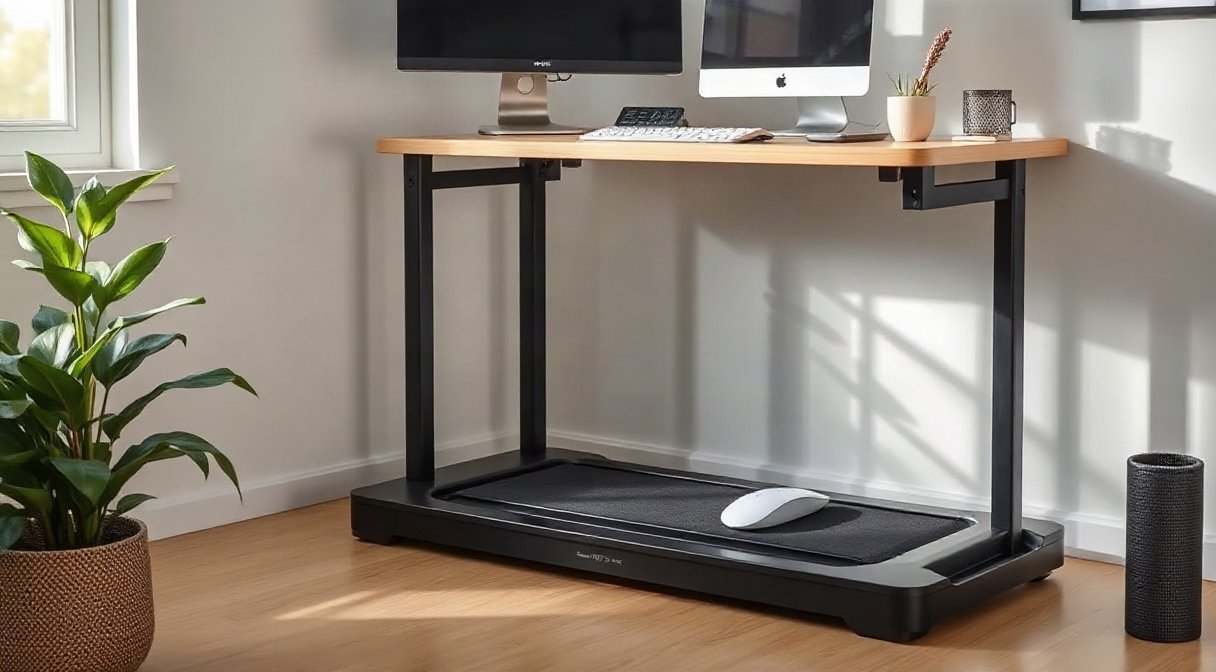
Remote work can turn a full day into hours of sitting, but a walking pad can add gentle movement without requiring a separate workout slot. The best under desk treadmill walking pad for your workspace is not necessarily the fastest or smallest: it should fit your desk, support a comfortable walking pace, and stay quiet enough for calls and concentration.
This guide compares five popular styles, including compact foldable pads, higher-speed 2-in-1 treadmills, and office-focused models. It also explains what to check in standing desk walking pad reviews, how to think about noise, and when a walking pad may not suit your work setup.
How to Choose the Best Under Desk Treadmill Walking Pad
Start with the way you plan to use the machine. A walking pad for slow movement during email work has different needs from a treadmill you will also use for brisk walking after hours. The best under desk treadmill walking pad should let you maintain a natural stride while your keyboard and monitor remain at comfortable heights. Check the deck length and width, user weight limit, controls, and whether the manufacturer permits continuous use for your intended session length.
Speed is a practical dividing line. Many desk-friendly models top out around a relaxed walking pace, while 2-in-1 machines may offer a higher range when their handrail is raised. Published speed limits vary by model and region, so confirm the current manual before purchasing. A higher maximum speed is not automatically a benefit at a desk: typing, reading, and video calls are usually easier at a controlled, slower pace.
Noise deserves a realistic check. Product pages may describe a motor as quiet, but the sound you hear depends on walking speed, floor type, footwear, belt condition, and the building itself. The belt and footfalls can be more noticeable than the motor, especially in an apartment with hard floors. Look for a return policy that gives you time to assess the machine in your own room, and use a suitable treadmill mat if the manufacturer recommends one.
Measure the full footprint, not just the running deck. Account for the console, power cord, clearance around the machine, and the space needed to fold or roll it away. Compact home office exercise equipment is useful only if you can safely store and retrieve it. A model that folds flat may suit a closet or the space beneath a bed; a heavier office treadmill may be better left in one place.
Also consider the workstation. A sit-stand desk makes it easier to change posture, but it must adjust high enough for comfortable walking. Confirm that the keyboard and monitor can be positioned correctly while you walk, and keep the belt clear of chair legs and cables. Treadmills are not a substitute for ergonomic setup or regular breaks.
- Controls: Check whether speed changes are available from a remote, console, or compatible app.
- Storage: Compare folded dimensions and the machine’s weight with your actual storage location.
- Safety: Look for a clear stop control, stable footing, and instructions for safe mounting and dismounting.
- Warranty and service: Read the coverage terms for the motor, frame, and belt before deciding.
For a broader look at making a small room work harder, see these small-apartment storage ideas. They can help you plan where a folded walking pad will live between work sessions.
Five Walking Pad Styles Compared in Standing Desk Walking Pad Reviews
These options represent different use cases rather than a universal ranking. Product specifications and included accessories can change, so verify the current manufacturer listing and manual before buying. The best under desk treadmill walking pad for a compact room may not be the right choice for a taller walker or someone who wants post-work jogging.
| Model or style | Typical speed approach | Space and storage | Best fit |
|---|---|---|---|
| WalkingPad C2 | Walking-focused, modest top speed | Folding deck design | Small rooms and light walking |
| UREVO 2-in-1 treadmill | Walking mode plus faster mode on applicable versions | Fold-up handrail on select models | Workday walking and separate workouts |
| GoYouth 2-in-1 treadmill | Walking range with a higher setting on some versions | Under-desk format, often with wheels | Budget-conscious multipurpose use |
| LifeSpan TR1200-DT3 | Office walking pace | Full-size office treadmill footprint | Frequent, dedicated desk use |
| Egofit Walker Pro M1 | Slow, compact walking range | Short, space-conscious deck | Short walks in tight work areas |
WalkingPad C2: The foldable-space option
The C2’s main appeal is its folding design, which makes it easier to store than a conventional office treadmill. It is intended for walking rather than running, and its walking-focused speed range can suit people who want gentle movement while handling routine tasks. Its smaller storage profile is particularly attractive in a shared room.
The trade-off is that a compact deck can feel restrictive to people with a long stride, and it does not provide the same workout flexibility as a rail-equipped 2-in-1 machine. Choose another model if you want to jog, need a longer walking surface, or expect to leave the treadmill running for long periods without checking the manual’s usage guidance.
UREVO 2-in-1: A flexible home option
UREVO sells several 2-in-1 versions, so features and speed limits depend on the exact model. On versions with a raised handrail, the machine can offer a separate, faster mode for dedicated exercise; with the rail lowered, it can work beneath a desk at a gentler pace. That flexibility is useful if one machine must serve both work and leisure.
Its added versatility can mean more parts to fold, store, and position than a minimalist pad. It may also be more treadmill than a desk walker needs. It is not the best choice for someone who wants the lightest possible unit, has very limited storage, or mainly needs a quiet, slow platform for typing.
GoYouth 2-in-1: A value-oriented multipurpose pick
GoYouth’s under-desk models are commonly positioned as accessible 2-in-1 options, with a walking mode and a faster mode on applicable versions. They can be appealing when you want a basic treadmill for occasional workday walking and separate exercise, without prioritizing premium office features.
Model details can differ, and buyers should check the exact control method, deck size, warranty, and noise expectations. This is not the ideal choice for someone who needs a commercial-style machine, a particularly long deck, or the strongest service support available. Compare the specifications of the specific listing rather than assuming every GoYouth version is identical.
LifeSpan TR1200-DT3 and Egofit Walker Pro M1
The LifeSpan TR1200-DT3 is an office-focused treadmill that prioritizes steady desk walking over fold-flat storage. Its dedicated design can suit people who expect frequent use and have a permanent workstation. It is a poor match for a small home where the machine must disappear after every session.
The Egofit Walker Pro M1 takes the opposite approach: a compact footprint aimed at slow walking in tight spaces. That can be helpful near a desk, but the shorter deck and walking-oriented performance will not suit everyone. Taller users, long-stride walkers, and anyone seeking a running machine should consider a larger model instead.
Noise and Speed: What to Expect During a Workday
Noise is one of the most important factors when comparing standing desk walking pad reviews, but a single decibel claim rarely tells the whole story. Manufacturers may describe a machine as quiet without giving a directly comparable measurement. Even when a measurement is provided, it may have been taken at a different speed, on a different surface, or without a person walking on the belt.
In practice, the sound comes from several sources: the motor, belt movement, footfalls, and vibration transmitted through the floor. The faster you walk, the more noticeable the combined sound may become. Hard flooring can transmit vibration into the room below, while an appropriate mat may help protect the floor and reduce some vibration. Check the manual for mat and flooring guidance instead of placing the treadmill on an unsuitable surface.
Think about your actual work rather than the quietest possible marketing claim. Slow walking may be manageable during reading, email, or a routine one-to-one call. Detailed writing, presentations, or microphone-sensitive meetings may be easier while standing still. A useful habit is to set the machine at a comfortable low pace for focused tasks, then stop it when you need complete stillness or maximum concentration.
Speed range should be judged in the same practical way. A desk treadmill’s useful range is the pace at which you can walk safely while maintaining good posture and doing your job. If you want faster exercise, look for a model whose manual explicitly supports a higher-speed mode and explains how the handrail should be positioned. Do not assume an under-desk mode is safe for jogging simply because the motor can run faster.
Ease of adjustment matters as much as the maximum speed. A remote that is easy to reach can make small changes less distracting. A machine that requires you to bend down or navigate a complicated app may interrupt work. Check whether the remote is included, whether it can be secured, and whether replacement controls are available if it is lost.
For health context, the CDC’s adult physical activity guidelines provide general recommendations for weekly movement and muscle-strengthening activity. A walking pad can help some people add light movement, but it does not replace varied activity, strength work, or advice from a healthcare professional.
Before buying, watch for signs that the walking setup is affecting your work: strained shoulders, shortened steps, difficulty reading, or frequent errors. Reduce speed, shorten the session, or stop if the setup feels uncomfortable. A good machine should support a sustainable routine rather than encourage you to push through fatigue.
Space-Saving Designs and a Safer Home Office Setup
“Compact” can describe a narrow deck, a folding frame, or simply a machine that has transport wheels. These features solve different problems. A foldable model may fit beneath a bed or behind a door, while wheels can make it easier to move between a desk and a storage spot. Neither feature eliminates the need to check the folded dimensions, machine weight, and clearance around the treadmill.
Measure the place where the treadmill will operate and the route you will use to store it. Doorways, desk legs, rugs, and nearby furniture can all complicate moving a machine. If you plan to tuck it away beneath a bed, measure the clearance at the lowest point, including any handles or raised sections. Leave enough room to unfold it fully without striking furniture or pulling a cable tight.
Choose the deck size with your body and stride in mind. A shorter deck can be convenient in a crowded home office, but it may not feel secure to a taller person or someone who naturally takes longer steps. A larger treadmill generally needs more permanent floor space. If you cannot safely walk without looking down or shortening your stride, the smaller footprint is not a good bargain.
Set up the desk before settling into a walking routine. The work surface should let you keep your shoulders relaxed and wrists comfortable while walking. Your screen should be easy to view without leaning forward. A height-adjustable desk is often helpful because the correct standing height may differ from seated settings. Make sure the desk remains stable and that the treadmill does not block access to its controls or emergency stop.
Keep cords, chair bases, pets, and loose objects away from the belt. Learn how to start, stop, and dismount the machine before using it while distracted. Wear suitable footwear and use any safety key or tether as instructed. The OSHA ergonomics guidance offers broader context for arranging workstations to reduce awkward postures; use the treadmill maker’s own safety directions for machine-specific requirements.
A walking pad can be part of compact home office exercise equipment, but it should not crowd out other essentials. You still need a safe path to the desk, enough room to step off, and a place for the remote. If your workspace is shared, consider whether folding and storing the unit after work is realistic. A bulky machine that becomes a daily obstacle may end up unused.
For related ideas on making small living spaces more functional, browse these space-saving storage solutions for small apartments. The same measuring-first approach helps determine whether your treadmill can be stored conveniently.
Finally, check the warranty, return conditions, and service arrangements before ordering. A compact machine is still a heavy piece of exercise equipment, and moving it may be difficult if it needs repair. Confirm who handles delivery, what is covered, and whether routine belt maintenance is expected. Keep the manual accessible, and follow its instructions for lubrication, cleaning, and safe storage.
Who Should Buy Each Type—and How to Make It Last
The right choice depends on the balance you need between storage, workout range, comfort, and regular use. The best under desk treadmill walking pad is the one you can fit safely, use at a comfortable pace, and maintain without making your workday harder. Treat feature lists as a starting point, then compare the machine’s dimensions and instructions with your real room and routine.
- Choose a foldable WalkingPad-style model if storage space is the main concern and you want walking, not running. Look elsewhere if you need a long deck or higher-speed workouts.
- Choose a 2-in-1 UREVO or GoYouth-style treadmill if you want desk walking plus a separate workout mode. Confirm the exact model’s speed limits and handrail requirements.
- Choose the LifeSpan office-treadmill style if you have a dedicated workspace and expect frequent, steady walking. Avoid it if the machine must be packed away after each use.
- Choose the compact Egofit-style option if floor space is tight and your stride suits its smaller deck. Consider a larger walking surface if you are tall or feel constrained.
Build use gradually. Begin with a short, slow session while doing a low-concentration task. Notice whether your balance, posture, or typing changes, and adjust the pace or desk height accordingly. You do not need to walk continuously through every meeting. Alternating between sitting, standing, and walking can make the setup more flexible and reduce the temptation to treat the treadmill as a test of endurance.
Routine care is straightforward but important. Keep the belt and surrounding area free of dust, inspect the power cord, and follow the manual’s instructions for belt alignment and lubrication. Avoid spraying cleaners directly onto the machine. Unplug it before cleaning if the manufacturer directs you to do so, and do not use the treadmill if the belt slips, the frame becomes unstable, or a control behaves unexpectedly.
Do not buy based on a promise that the machine will make you productive or solve every health concern. Some people find walking helps them stay alert; others prefer a stationary desk for demanding tasks. If you have balance limitations, joint concerns, or a medical condition that could affect safe walking, ask a qualified healthcare professional whether this type of exercise is appropriate.
Before checking out, verify the exact model number, deck measurements, maximum user weight, speed range, included remote, return window, warranty, and ongoing maintenance requirements. Read recent owner feedback with a critical eye: look for recurring comments about belt tracking, controls, noise, and storage rather than relying on a single glowing or negative review. These details are more useful than a generic “quiet” label.
A thoughtful shortlist beats choosing the smallest or fastest machine by default. Compare your room measurements with the product’s operating and folded footprint, and decide where it will live between sessions. If possible, test your desk height and walking posture before committing. A walking pad that fits your daily routine is more valuable than a feature-rich treadmill that stays folded in a closet.
Frequently Asked Questions
Can I type while walking on an under-desk treadmill?
Many people can handle simple tasks at a slow pace, but typing accuracy and concentration may change while walking. Start slowly with routine work, then stop or reduce speed for detailed writing, presentations, or meetings that require full focus.
Are walking pads quiet enough for video calls?
It depends on the treadmill, walking speed, floor, microphone, and room acoustics. Motor noise and footfalls may be picked up even when a product is marketed as quiet. Test your setup at a low speed, and stop walking when the sound distracts others.
What speed should I use while working?
There is no universal setting. Choose a comfortable walking pace that lets you maintain balance, posture, and work quality. Begin slowly and adjust based on how you feel. Follow the machine’s instructions, especially if it has separate desk-walking and higher-speed modes.
Is a folding walking pad better than a full-size office treadmill?
Folding designs are usually easier to store, while larger office treadmills can offer a more substantial deck and suit a permanent workstation. Your available floor space, stride length, and intended use should guide the choice rather than the folding feature alone.
Can I use a walking pad on carpet?
Check the manufacturer’s instructions before placing a treadmill on carpet. The machine needs a stable, suitable surface and adequate ventilation. A mat may be recommended for floor protection or vibration, but it should be compatible with the treadmill and not obstruct airflow.
What should I check in standing desk walking pad reviews?
Look for comments about belt tracking, control reliability, noise at different speeds, deck comfort, storage, and customer service. Compare reviews with the manufacturer’s current specifications and warranty. The best under desk treadmill walking pad is a fit for your room and routine, not simply the highest-rated listing.
Conclusion: Choose the Walking Pad That Fits Your Workday
The best under desk treadmill walking pad depends on how much space you have, how quietly you need to work, and whether you want a simple walking surface or a 2-in-1 exercise machine. Foldable designs make storage easier, office-focused models suit permanent setups, and compact decks can be helpful in tight rooms—but every space-saving feature involves trade-offs.
Measure first, confirm the current specifications, and think about the tasks you will do while walking. Compare noise expectations, speed controls, deck size, storage needs, and warranty details before making a decision. Then start with short, comfortable sessions and adjust your desk and routine as needed.
Use this guide to shortlist the models that suit your home office, then compare their current listings and manuals before you buy. A well-matched walking pad can make movement more accessible without taking over your workspace.