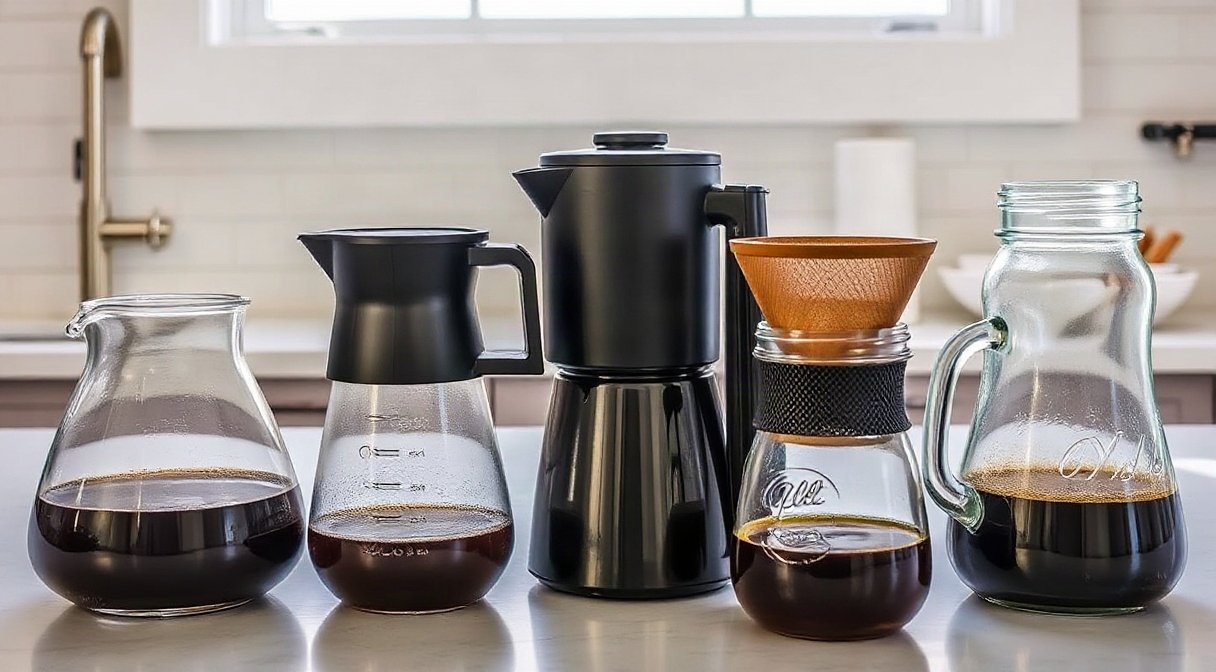
Good cold brew should taste smooth and full without turning your kitchen into a science project. The best cold brew coffee maker makes that easy: add grounds and water, wait, then pour a clean cup or concentrate. But pitchers, immersion jars, and dedicated brewers behave differently, especially when it comes to filtering fines and cleaning wet grounds.
This kitchen cold brew comparison looks at five widely available designs: Takeya, Hario Mizudashi, OXO, County Line Kitchen, and KitchenAid. We compare practical brew schedules, flavor potential, cleanup, and relative value so you can choose a brewer that suits your routine—not just your counter.
How We Compared These Cold Brew Makers
A useful comparison should account for more than the finished drink. Cold brew is forgiving, but the brewer affects how easy it is to use a consistent coffee-to-water ratio, keep grounds contained, and strain the batch without a mess. We considered each design as a home user would: fill it, steep a batch according to the maker’s guidance, pour it, store it, and deal with the used grounds afterward.
Brew time is not a simple score where the fastest product automatically wins. Many immersion brewers need roughly 12 to 24 hours, while some makers recommend a shorter steep. Water temperature, grind size, coffee variety, and personal taste all change the result. For a fair kitchen cold brew comparison, follow the included instructions first, then adjust one variable at a time. A finer grind or a longer steep can make coffee taste stronger, but may also bring more bitterness or sediment.
We judged flavor by the practical qualities a home brewer can control: clarity, strength, balance, and how easy it is to dilute a concentrate. No pitcher creates a particular flavor on its own. Fresh beans, a coarse and even grind, filtered water, and a measured ratio matter more than a fancy-looking container. For a general overview of what distinguishes cold brew, see the National Coffee Association’s explanation of cold brew.
Cleanup was evaluated by looking at the filter’s shape, the effort required to empty wet grounds, and how many parts need rinsing. Fine-mesh baskets can produce a cleaner pour, but they need a thorough rinse so oils and particles do not build up. A wide-mouth jar is easier to reach into than a narrow pitcher, while a tap can be convenient but adds one more component to clean around.
Value means more than buying the least expensive brewer. We weighed capacity, construction, filtering convenience, storage footprint, and whether the design makes you likely to use it regularly. The Takeya and Hario are generally entry-level choices, while feature-rich or dedicated systems tend to occupy a higher tier. Exact prices change, so check current listings before deciding.
- Brew-time practicality: Does the design fit an overnight or shorter steeping routine?
- Extraction control: Is it easy to measure grounds and water and adjust strength?
- Filtering: Does the basket keep most grounds out of the finished drink?
- Cleaning: Can you empty and rinse it without awkward handling?
- Value: Does its capacity and convenience justify its place in your kitchen?
These criteria favor products that are straightforward and repeatable. They also make clear why the best cold brew coffee maker for a household that drinks a glass daily may differ from the best option for someone who prepares one concentrated batch every week.
Best Cold Brew Coffee Maker for Simple Everyday Batches
Takeya Cold Brew Coffee Maker: The Easy-Pour Pitcher
The Takeya pitcher is a sensible starting point for people who want cold brew without a separate brewing station. Its slim shape fits many refrigerator doors, and the removable filter sits inside the pitcher while coffee steeps. After brewing, the filter lifts out, leaving the beverage ready to pour. It is a familiar, low-fuss format rather than a complex concentrate system.
For a typical overnight routine, follow Takeya’s recommended proportions and steeping guidance, then taste before extending the brew. Its filter keeps the bulk of grounds together, and the pitcher is convenient for storing a ready-to-drink batch. The main strength is consistency through simplicity: the filter and container work together, and you do not need to transfer coffee through a second strainer for ordinary use.
The trade-off is that filter capacity and pitcher volume limit how much coffee you can prepare at once. If you want a highly concentrated base for several days of lattes, you may prefer a system designed specifically for concentrate. Some fine sediment can also pass through, particularly if the grind is too fine or the filter is packed tightly. The best cold brew coffee maker is not necessarily the one with the most components; here, ease of everyday use is the appeal.
- Good at: Straightforward batches, refrigerator storage, and easy pouring.
- Less good at: Large-volume preparation or producing an especially clear, strong concentrate.
- Buy something else if: You need a large jar, a tap, or a batch designed for concentrated servings.
Hario Mizudashi: Compact and Clean-Tasting
Hario’s Mizudashi is another pitcher-style brewer, with a slim removable filter and a simple glass container. Its uncomplicated design makes it attractive to people who want a smaller footprint and a clean, mild result. Hario’s product information describes the brewer and its intended use; consult the Hario Mizudashi product details for the model-specific capacity and care guidance.
The filter format keeps the grounds contained, and the clear vessel makes it easy to see the batch as it steeps. It is well suited to an overnight brew, with the maker’s stated steeping recommendation serving as a starting point. Use a coarse grind and avoid compressing the coffee in the basket; water needs to circulate through the grounds for even extraction.
Its main limitation is capacity: the compact pitcher is better for a modest household than for entertaining or prepping multiple large servings. The glass body also calls for a little more care than a durable plastic pitcher, especially when moving it in a crowded refrigerator. Cleaning is generally uncomplicated, though the narrow filter still needs a rinse after use.
Our take: Takeya is the practical all-rounder for users who value a sturdy everyday pitcher, while Hario appeals to those who want a compact glass brewer and a restrained, clean profile. Both work best with measured ratios and coarse grounds. Neither is ideal if your priority is a high-volume concentrate setup.
These two designs show why an iced coffee concentrate maker and a ready-to-drink pitcher are not interchangeable categories. A pitcher tends to make coffee suited to pouring over ice, while concentrated systems ask you to dilute the result to taste. If you mainly want cold coffee ready for breakfast, a pitcher may be the better value.
OXO and County Line Kitchen: For Concentrate or Bigger Batches
OXO Compact Cold Brew Coffee Maker: A More Guided Process
The OXO Compact is built around a dedicated brewing container and a separate serving carafe. Its rainmaker distributes water over the grounds, which helps wet them more evenly at the start than simply pouring in a narrow stream. The compact footprint is useful when counter and refrigerator space are limited, and the design makes the finished concentrate easy to drain into its carafe.
OXO’s official instructions are especially useful for keeping the process repeatable, including how to set up the brewer and release the concentrate. Read the OXO Compact Cold Brew Coffee Maker instructions and product details before your first batch. The system suits people who like a stronger base that can be diluted with water or milk rather than a pitcher of ready-to-drink coffee.
The upside is process control: the rainmaker, dedicated filter, and draining carafe give the brewer a more deliberate workflow. The downside is that there are more pieces to assemble, store, and rinse than with a basic pitcher. A dedicated brewer also takes more counter space during steeping, even if its parts fit away neatly afterward. It is not a compelling upgrade for someone who rarely makes cold brew or prefers a mild, ready-to-pour batch.
- Good at: Concentrate, repeatable setup, and separating steeping from serving.
- Less good at: Minimal-part cleanup and users who want coffee immediately ready to drink.
- Buy something else if: You prioritize the simplest possible pitcher or need a larger batch.
County Line Kitchen Cold Brew Maker: Capacity and Mason-Jar Simplicity
County Line Kitchen pairs a wide-mouth jar with a removable stainless-steel filter. That format favors capacity and easy access: a broad opening makes it simpler to add grounds, remove the filter, and reach inside the jar during washing. It is a useful choice for people who want a large batch and do not mind a substantial container taking up refrigerator space.
Its main advantage is straightforward volume. You can make enough for several servings, and the jar’s familiar shape is easy to understand. The filter basket is a practical alternative to pouring grounds loose into a vessel and filtering them afterward. For best extraction, leave enough room for water to move through the grounds rather than overfilling the basket.
The jar is heavier and bulkier than a slim pitcher, especially when full. It also does not provide the same guided water distribution as the OXO, so careful filling and stirring may help prevent dry pockets. A stainless filter is reusable, but it needs a thorough rinse; wet grounds can cling to the mesh. Anyone seeking a compact, lightweight brewer or an especially polished countertop setup may find it less appealing.
Our take: OXO is the stronger pick for a deliberate concentrate workflow and clear instructions. County Line Kitchen is the more practical choice when batch size and a wide opening matter most. In this kitchen cold brew comparison, both offer a step up in capacity or process control, but each asks for more storage or cleanup attention than a basic pitcher.
Consider whether you will use the concentrate as a base for iced drinks, add milk, or dilute it with water. An iced coffee concentrate maker can be versatile, but only if you enjoy measuring dilution. If you want a glass straight from the refrigerator, a simpler pitcher avoids that extra step. For other kitchen appliances where noise and cleanup influence the decision, see our guide to a quiet blender for smoothies.
KitchenAid Cold Brew Maker: A Dedicated, Tap-Ready Option
The KitchenAid Cold Brew Coffee Maker is designed for people who want a dedicated batch brewer with a built-in serving tap. Its steeping container sits inside a larger vessel, and the tap lets you dispense concentrate without lifting and tipping a heavy jar. That convenience is the defining reason to consider it, particularly if you prepare coffee for several people or make batches regularly.
The maker’s metal steeper holds the grounds, while the outer container stores the finished brew. The system is intended for a long steep, commonly overnight, so plan ahead rather than expecting a quick drink. KitchenAid’s product information should be your reference for assembly, capacity, and care. A measured recipe remains important: concentrate can taste harsh if it is over-extracted or too strong for the way you serve it.
The tap makes serving easy, but it adds a part that needs attention during cleaning. Grounds and coffee oils should not be left in the steeper, and the area around the dispenser should be rinsed carefully. The overall vessel is also more substantial than a refrigerator-door pitcher. If you have limited shelf space or only make a small amount at a time, the scale and higher relative cost may outweigh the convenience.
- Good at: Serving multiple portions, dispensing concentrate, and preparing batches ahead.
- Less good at: Compact storage, quick cleanup, and occasional small-batch use.
- Buy something else if: You want a budget-friendly starter, minimal parts, or a slim refrigerator pitcher.
Among the five, KitchenAid is the dedicated appliance-style option. It is not automatically the best cold brew coffee maker for every household; the tap is valuable only if you will use it. If your routine involves pouring a glass once a day, Takeya or Hario may be more sensible. If you serve a family or keep concentrate ready for guests, the dispenser can make a larger batch feel easier to manage.
Think about where the brewer will live before buying. Measure refrigerator shelves and counter clearance, including space needed to open the lid and remove the steeper. That small check can prevent a large brewer from becoming an inconvenient cupboard resident. Readers optimizing compact kitchens may also appreciate these small-apartment storage ideas.
For extraction, start with the maker’s recommended recipe, then make changes in small increments. A coarser grind and shorter steep often soften a too-intense batch; a longer steep or more coffee can build strength, though it may make the result less balanced. Take notes if you want to repeat a batch. Using the same beans, water, ratio, and steep time makes adjustments more meaningful than changing several factors at once.
KitchenAid is best considered a convenience purchase rather than a flavor shortcut. It will not make poor beans taste excellent, and the tap does not remove the need to dilute concentrate appropriately. What it offers is accessible storage and dispensing for a larger ready supply. That distinction helps put its higher relative investment in context.
How to Choose, Brew, and Clean for Better Value
Start with the kind of coffee you actually drink. If you want a mild glass over ice, choose a pitcher such as Takeya or Hario. If you prefer a strong base to mix with milk, water, or flavorings, look at OXO or KitchenAid. County Line Kitchen sits between the two approaches: its jar offers generous batch capacity, while the removable filter keeps the process familiar.
Next, estimate the batch you can finish while the coffee is fresh. A larger container may appear to offer better value, but unused cold brew still occupies refrigerator space. A smaller brewer can be the more economical choice if it fits your weekly routine and reduces waste. Conversely, a household with several daily coffee drinkers may appreciate a larger vessel that avoids frequent brewing.
To improve extraction without buying a new brewer, use these basics:
- Choose freshly roasted beans and grind them coarse and evenly.
- Measure coffee and water rather than relying on scoops or guesswork.
- Use clean, preferably filtered water, and fully wet the grounds at the beginning.
- Follow the brewer’s steeping directions, then taste before extending the time.
- Strain and store the finished coffee in a clean, covered container.
Cleaning is part of the value calculation. Empty the filter soon after brewing instead of letting wet grounds dry into the mesh. Knock the grounds into compost or the trash, rinse the basket from both sides, and wash the vessel and lid according to the manufacturer’s care instructions. Avoid abrasive tools that can damage a fine mesh or scratch glass. If coffee oils linger, a gentle soak with dish soap usually helps; rinse thoroughly before the next batch.
Do not assume every component is dishwasher-safe. Check the manual for your specific model, especially for filters, lids, taps, and seals. A dishwasher-friendly vessel saves effort, but it does not eliminate the need to remove grounds carefully. On a tap model, flush the dispenser so residue does not build up inside the outlet. Regular rinsing is easier than trying to scrub dried coffee from narrow crevices later.
Flavor problems are often fixable. Weak coffee may need a stronger ratio or a slightly longer steep. Excessive bitterness can point to a fine grind, a long steep, or a ratio that is too strong for your taste. Muddy texture usually means grounds are too fine or the filter is overloaded. Adjust one variable at a time and record what changed. The best cold brew coffee maker should make this process convenient, but technique still shapes the result.
When comparing value, consider the whole routine: storage, serving, filters, cleaning, and how many batches you will make. Entry-level pitchers offer an easy start, while dedicated systems justify a higher relative cost through added controls or dispensing convenience. The right iced coffee concentrate maker is the one whose workflow you will repeat—not the one with features you rarely touch.
Our overall picks are straightforward: choose Takeya for everyday convenience, Hario for compact glass simplicity, OXO for a guided concentrate process, County Line Kitchen for a large jar format, and KitchenAid when batch serving from a tap is worth the extra space. That is the practical answer to this kitchen cold brew comparison: match the design to your serving habits before weighing small differences in features.
Cold Brew Maker FAQ
How long should cold brew steep?
Follow the instructions for your specific brewer and coffee recipe. Many immersion batches steep overnight, with roughly 12 to 24 hours being a common range, while some makers recommend a shorter window. Taste the batch when the minimum suggested time is reached. Extend the steep in small increments if it seems weak, rather than assuming a longer brew is always better.
Is cold brew stronger than iced coffee?
Cold brew can be brewed as a concentrate, but it is not automatically stronger in the glass. Strength depends on the coffee-to-water ratio and how much you dilute it before serving. Iced coffee usually refers to hot-brewed coffee chilled or poured over ice. Check the recipe and serving directions before comparing the two.
Which brewer is easiest to clean?
A simple pitcher with a removable filter generally has fewer components to deal with than a brewer with a separate carafe or tap. Wide openings also make it easier to reach inside. Whichever model you choose, empty grounds promptly and rinse the mesh thoroughly. Consult its care instructions before putting components in a dishwasher.
Can I use regular ground coffee?
You can, but a coarse grind is usually a better starting point for immersion cold brew. Very fine grounds may pass through a filter, create sediment, and make extraction taste harsh. If buying pre-ground coffee, choose a coarse grind intended for cold brew or French press when available.
What is the best cold brew coffee maker for concentrate?
OXO is a strong choice for a guided concentrate routine, while KitchenAid suits people who want to dispense a larger batch from a tap. County Line Kitchen can also make a substantial batch in a straightforward jar format. Choose based on capacity, cleanup, and storage—not the assumption that a more complex brewer guarantees better flavor.
How long does homemade cold brew keep?
Keep it covered and refrigerated, and follow any storage guidance provided by your brewer or recipe. Flavor can fade during storage, particularly after dilution, so many people prefer to make manageable batches and drink them while they taste fresh. Use clean equipment and discard coffee that smells or looks unusual.
Conclusion: Pick the Brewer That Fits Your Routine
The best cold brew coffee maker is the one that matches how much you drink, how you like to serve it, and how much cleanup you will tolerate. Takeya and Hario keep things simple; OXO adds a guided concentrate workflow; County Line Kitchen emphasizes jar capacity; and KitchenAid offers convenient tap dispensing. Every option has trade-offs, so consider storage and cleaning alongside flavor.
For most first-time buyers, a straightforward pitcher is the lowest-friction way to start. Choose a concentrate-focused design if you regularly mix drinks or prepare coffee for several people. Compare current product details and care instructions, then pick the brewer you will actually use. A measured recipe and coarse grind will do as much for your results as the equipment itself.