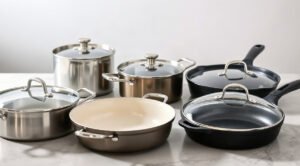
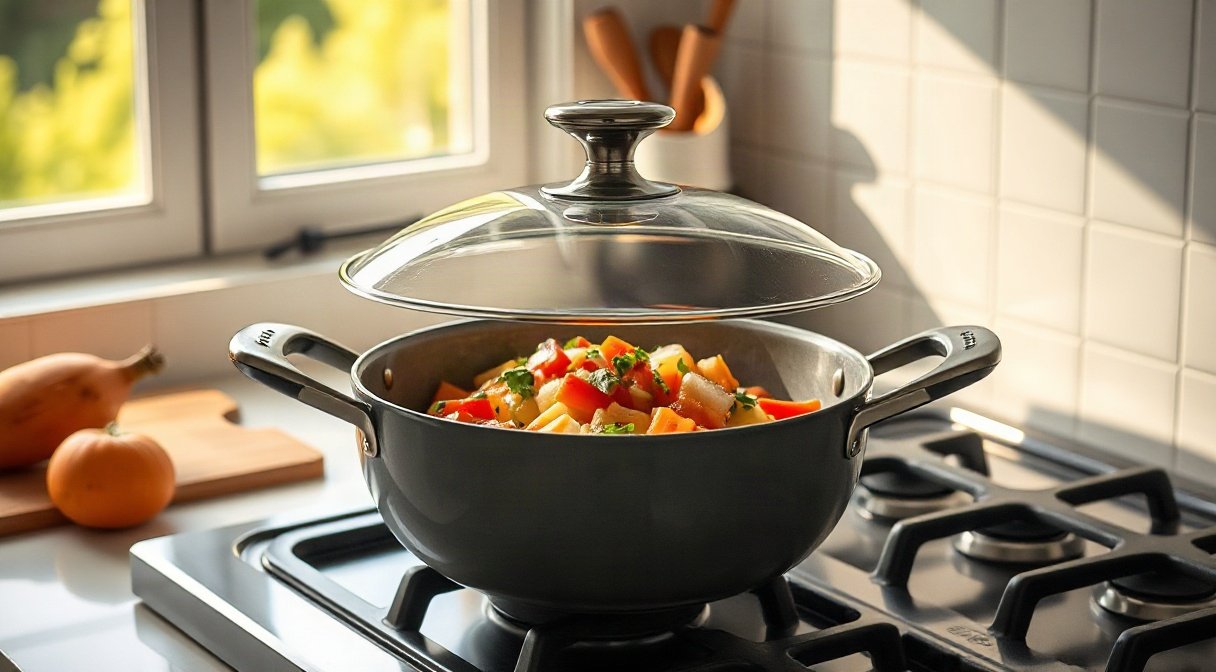
A skillet with a fitted lid can turn a quick sear into a covered simmer or a complete one-pan meal. The best ceramic skillet with lid should also suit your stove, cooking habits, and oven plans—not just look attractive in a product photo. Ceramic-coated pans vary in construction, lid compatibility, heat limits, and care requirements.
This guide compares five ceramic skillet options and explains where each can work well, where it may disappoint, and who should choose another pan. Treat “non-toxic” as a prompt to check the actual coating and manufacturer information, not as a guarantee that every product or cooking practice is risk-free.
How to Choose the Best Ceramic Skillet With Lid
Start with the cooking surface and size. A 10-inch skillet is manageable for eggs, a couple of portions, and compact kitchens. A 12-inch model gives more room to brown ingredients without crowding, but it weighs more and needs a larger burner. If you regularly cook for a family, measure your burner and storage space before choosing a wide pan.
Next, check that the lid is included with the exact listing. Product families are often sold in multiple configurations: some packages include a glass lid, while others sell the pan alone. A lid should sit securely and have a handle that is comfortable to grip. Glass makes it easy to monitor simmering food, but it can add weight and requires careful handling.
“Ceramic nonstick” generally describes a nonstick coating made with a ceramic-based sol-gel finish, rather than a pan made entirely from ceramic. The base is commonly aluminum or hard-anodized aluminum. Read the manufacturer’s current materials and care information if avoiding a particular substance is important to you. Claims such as “PFOA-free” do not, by themselves, describe every material in a pan or establish that all use conditions are harmless.
For stovetop-to-oven cooking, check the oven limit for the pan, handle, and lid separately. The lowest limit is the one that matters when the whole assembly goes into the oven. Some glass lids or soft-touch handles have lower heat limits than the skillet body. Never assume a pan is oven-safe simply because its manufacturer advertises a high temperature for the pan itself.
- Stovetop compatibility: Confirm whether the pan works with your cooktop, especially induction.
- Construction: Compare weight, handle attachment, base stability, and how evenly it heats.
- Care: Look for hand-washing instructions, utensil guidance, and limits on high heat.
- Included parts: Verify the lid, diameter, and any care accessories in the actual package.
A ceramic nonstick frying pan can make low-fat cooking and cleanup easier, but it is not a substitute for a heavy stainless-steel or cast-iron pan when you want intense searing or decades of hard use. For a wider look at material claims and cookware labels, see our guide to non-toxic cookware safety checks.
Our picks below are best understood as product families to investigate, not a promise that every size or bundle has identical features. Check the specific manufacturer listing and manual before purchase, particularly if you need a particular coating, lid, or oven limit. For additional context on evaluating cookware, consult Consumer Reports’ cookware buying guide.
GreenPan Valencia Pro: A Versatile Best Ceramic Skillet With Lid Option
GreenPan’s Valencia Pro line is a strong place to start if you want a more substantial everyday pan and a ceramic nonstick surface. The line is known for hard-anodized aluminum construction and a ceramic coating, but available sizes and package contents differ. Look specifically for a Valencia Pro skillet listing that includes a lid; do not assume the lid shown in a lifestyle image comes with every version.
What it does well: The broader Valencia Pro range is designed for frequent stovetop cooking, and its more substantial construction can feel steadier than an especially lightweight budget pan. A roomy skillet is useful for browning vegetables, cooking a family-size portion, and then covering the food to finish. The nonstick surface can help release delicate foods when the pan is properly preheated and used at moderate heat.
If your cooking often moves from stove to oven, this line may be a good candidate, but confirm the limits for the exact pan and lid. Manufacturer instructions can set separate maximum temperatures for the body, handle, and glass cover. A temperature rating for the pan alone does not mean the lid can safely go into the oven at the same temperature.
Where it falls short: A more substantial skillet is not necessarily the easiest one to lift, especially when full. Ceramic coatings also need considerate use: repeated overheating, abrasive cleaning, and metal utensils can shorten the useful life of many nonstick finishes. Nonstick performance is not permanent, and it should not be treated as equivalent to an uncoated pan that can take aggressive scrubbing.
Another drawback is the need to check compatibility carefully. Do not infer induction performance from the name of a product family or from a description of another size. Verify the specific model’s base and the manufacturer’s cooktop guidance. The same goes for the lid: bundled pieces can change between retailers and product revisions.
Who should buy it: Consider this option if you want a capable everyday skillet, value a more solid feel, and are prepared to follow the care instructions. It suits cooks who make covered stovetop dishes and occasional oven-finished meals, provided the lid and pan are both rated for the intended use.
Who should look elsewhere: Choose a lighter pan if wrist comfort or easy handling is your priority. If you routinely use very high heat, metal tools, or dishwasher cycles, a ceramic-coated skillet may not fit your habits. An uncoated stainless-steel pan is a better alternative for high-heat searing and long-term durability, while a simple low-cost skillet may be more sensible if you expect to replace nonstick cookware regularly.
Before ordering, confirm the size, lid inclusion, stove compatibility, and care guidance on the exact product page. For the best ceramic skillet with lid in this category, the fit depends as much on those details as on the brand name.
GreenLife Soft Grip: A Lighter, Budget-Friendly Pick
GreenLife Soft Grip ceramic cookware is worth considering when you want a more approachable, lightweight pan for everyday cooking. The line includes different sizes and sets, so search for a skillet package that explicitly includes a lid. Versions may differ in handle and body details; the name alone does not establish the oven limit or which pieces come in the box.
What it does well: A lighter skillet is easier to maneuver for flipping, serving, and cleaning. That can matter more than premium construction if you prepare straightforward meals and want a pan that does not feel cumbersome. The ceramic nonstick surface can help with eggs, pancakes, and other foods that tend to cling, while a fitted lid supports gentle steaming and covered cooking.
Its accessible positioning makes it a practical choice for first apartments, occasional cooks, or households building a basic cookware setup. A smaller skillet can handle breakfast or a quick side dish without taking up much cabinet space. If your goal is an everyday pan rather than a high-performance searing tool, this family may offer the simpler experience you need.
Where it falls short: Lightweight cookware can feel less planted than a heavier pan, and the base may not deliver the same cooking experience as a thicker, more premium skillet. It is also important not to assume that a ceramic coating stays slick indefinitely. Frequent high heat and rough treatment may reduce nonstick performance, so this is not a “buy once and forget it” pan.
Oven use requires extra caution with this pick. Soft-touch handles and lids can have lower temperature limits than metal cookware, and some versions may be intended mainly for stovetop cooking. Check the manual for the specific skillet and lid before planning a recipe that starts on the stove and finishes in the oven. If the lid is not oven-rated, use the pan in the oven only if its own instructions allow it, and finish the dish uncovered.
Who should buy it: This is a sensible option for budget-conscious cooks who want an easy-to-lift pan for eggs, vegetables, and simple covered meals. It may suit a small household or someone who prefers uncomplicated cookware and is comfortable replacing a nonstick pan when its surface wears.
Who should look elsewhere: Skip it if you need a robust skillet for daily high-heat cooking, heavy oven use, or demanding searing. It is also not ideal if you want a pan that can tolerate metal utensils or rough dishwashing. A heavier hard-anodized model may feel more stable, while stainless steel is a better choice for cooks who prioritize long service life over easy release.
Before buying, compare the included lid, handle material, oven rating, and cooktop compatibility. If the package details are unclear, choose a listing that spells out the exact pieces and consult the manufacturer rather than relying on a retailer’s generic product-family description.
Blue Diamond and T-fal: Two Ceramic Skillet Alternatives
Blue Diamond’s ceramic-coated skillet line and T-fal’s ceramic cookware options give shoppers two more names to compare. Both brands sell multiple collections, sizes, and bundles, so treat these as starting points rather than guarantees about a particular pan. For either one, find a listing that names the skillet size and explicitly includes a lid before comparing it with other picks.
Blue Diamond: For cooks who want an easy-release surface
Blue Diamond markets ceramic nonstick cookware with a diamond-infused coating. Its broad appeal is straightforward: an easy-release surface can be convenient for eggs, fish, and quick weekday cooking, and a lidded size can handle covered dishes. The brand’s claims and the construction details can vary by collection, so read the specific model’s product information instead of assuming every Blue Diamond pan has the same coating, handle, or oven rating.
Trade-offs: A branded coating does not make a skillet immune to wear. Follow the tool and heat guidance, and avoid assuming that marketing language means you can use metal utensils or extreme heat without consequences. As with other ceramic nonstick pans, long-term performance depends on how the surface is used and cared for.
Best for: Someone who prioritizes convenient release and wants a readily available everyday skillet. Not for: Cooks who need a heavy searing pan, plan to use harsh tools, or want to avoid replacing coated cookware.
T-fal ceramic: For practical everyday cooking
T-fal offers several cookware collections, including ceramic-coated options. A ceramic skillet with lid in the right bundle can be useful for routine frying, reheating, and covered stovetop meals. Check whether a specific model includes any special heat indicator or other feature before relying on it; features differ among collections and should not be assumed based on the brand alone.
Trade-offs: The exact feel, oven suitability, and lid design depend on the collection. Some versions may be less suitable for oven transitions or induction than a shopper expects. Confirm the manual’s limits for both the pan and lid, and use the lowest stated limit when transferring the assembled cookware to the oven.
Best for: Home cooks seeking a familiar, practical option for basic daily tasks. Not for: Anyone who needs confirmed high-temperature oven use, a particular induction-ready base, or a consistent feature set across different sizes without checking the model number.
These two brands show why a useful oven safe skillet review needs more than a coating name. Compare the exact diameter, handle construction, lid inclusion, stove compatibility, and oven limits. Manufacturer care details are especially important when your recipe requires a covered pan in the oven. GreenPan’s care and use instructions for ceramic cookware offer one example of the sort of guidance shoppers should consult.
Whichever line you shortlist, be cautious about retailer pages that mix specifications from several sizes. Verify the exact model number and bundle contents, and contact the manufacturer if a lid’s oven limit is not clear. That small check can prevent an otherwise useful pan from being the wrong tool for your recipes.
Comparison, Care, and Choosing the Right Pan
The best ceramic skillet with lid is the one that matches your everyday cooking and has clear instructions for the way you plan to use it. The comparison below highlights broad use cases, not guaranteed specifications for every package. Confirm the current manufacturer listing for exact materials, compatibility, lid inclusion, and temperature limits before placing an order.
| Option | Best suited to | Main trade-off | Check before buying |
|---|---|---|---|
| GreenPan Valencia Pro | Regular cooking and a more substantial feel | May feel heavier; care still matters | Exact lid bundle, cooktop fit, pan and lid oven limits |
| GreenLife Soft Grip | Light handling and budget-conscious kitchens | Less suited to rough, high-heat use | Handle material, oven rating, included lid |
| Blue Diamond ceramic | Convenient nonstick cooking | Coating life depends on gentle use | Collection, size, lid, and utensil guidance |
| T-fal ceramic | Everyday meals and familiar cookware options | Features differ by collection | Model number, induction status, oven limits |
To help a ceramic finish last, cook at low or medium heat unless the instructions specifically allow otherwise. Many nonstick tasks do not need a smoking-hot pan. Use a small amount of suitable cooking fat when recommended, and avoid leaving an empty skillet heating unattended. Let the pan cool before washing; a sudden temperature change can stress cookware and glass lids.
Use utensils the manufacturer approves. Silicone, wood, or nylon tools are often a gentler choice than metal, but the exact care instructions take precedence. Wash with a soft sponge and mild dish soap unless the manufacturer specifies another method. Even when a pan is labeled dishwasher-safe, hand-washing may be gentler on its finish and handle over time.
Inspect the cooking surface and lid periodically. If the coating is badly scratched, peeling, or no longer releases food as intended, follow the manufacturer’s advice about continued use and replacement. Do not try to restore a worn coating with abrasive cleaners. For general guidance on food-contact materials and cookware questions, the FDA’s information on food-contact substances is a useful starting point, though it does not replace product-specific instructions.
For one-pan meals, think through the whole recipe before choosing. A skillet with a lid can steam vegetables, cook a covered grain dish, or keep a sauce from reducing too quickly. If the recipe finishes in the oven, verify both components’ ratings. For a deeper look at cookware material claims across a full set, our guide to choosing a non-toxic cookware set can help you compare options beyond a single skillet.
Finally, decide which compromises you can accept. A lightweight model is easier to lift but may feel less substantial. A larger skillet gives you room but takes more storage and can be awkward to clean. A ceramic finish may simplify food release, yet it calls for more careful heat and utensil choices than many uncoated pans. Match the pan to your habits rather than buying based on a coating label alone.
Frequently Asked Questions
Are ceramic-coated skillets completely non-toxic?
No cookware label can guarantee safety under every condition. “Ceramic nonstick” describes a coating category, and product materials and claims vary. Read the manufacturer’s information for the exact model, use the pan as directed, and replace it according to the brand’s guidance if the coating is damaged.
Can I put the lid in the oven with the skillet?
Only if the manufacturer explicitly rates that lid for oven use at the temperature required. The lid, knob, handle, and skillet can have different limits. Follow the lowest stated limit for the assembled pan, or leave the lid out if it is not approved for oven use.
Will a ceramic skillet work on an induction cooktop?
Not necessarily. Ceramic describes the coating, not the base’s magnetic properties. Check the exact skillet’s specifications for induction compatibility; do not assume that another size or collection from the same brand will work on your cooktop.
How long does ceramic nonstick performance last?
There is no single lifespan that applies to every pan. Frequency of use, heat level, utensils, cleaning, and storage all affect wear. Moderate heat, gentle washing, and protective storage can help, but nonstick performance can decline with use.
What size skillet should I choose?
A smaller skillet is easier to store and works well for modest portions, while a larger one provides more room for family meals and browning. Consider your burner diameter, typical batch size, cabinet space, and the weight of the pan before choosing.
Is a ceramic skillet a good choice for high-heat searing?
Usually, an uncoated stainless-steel or cast-iron skillet is a better fit for repeated high-heat searing. Ceramic nonstick pans are generally best used according to their moderate-heat guidance. Check the manufacturer’s instructions rather than treating any coating as suitable for unlimited heat.
Conclusion: Choose for Your Cooking Routine
The best ceramic skillet with lid combines the right size, a confirmed lid, compatible construction, and clear care instructions. GreenPan Valencia Pro may appeal to cooks who prefer a more substantial pan; GreenLife Soft Grip suits shoppers prioritizing light handling; and Blue Diamond or T-fal options are worth comparing for everyday nonstick cooking. Verify the exact model before buying, especially if you need induction compatibility or oven use. Choose the pan that fits your recipes, then protect its coating with moderate heat and gentle care.
Ready to narrow it down? Compare the specific sizes and lid bundles that fit your kitchen, and use the manufacturer’s manual to confirm every cooking limit before checkout.