When every cupboard shelf is full, storing the container can be harder than storing the leftovers. Collapsable silicone storage containers compress after use, freeing up room in small kitchens and making meal prep easier to pack for travel. But collapsible walls, lids, materials, and cleaning needs vary, so the most compact option is not automatically the best one.
This guide compares five useful container styles, explains what each does well and where it falls short, and helps you choose a foldable food container set that suits your routine. The goal is practical space saving kitchen organization—not a promise that one shape or material works for everyone.
How to Choose Collapsable Silicone Storage Containers
Start with the food you actually pack. A wide, shallow container suits cut fruit, sandwiches, and leftovers you want to cool quickly. A taller bowl-shaped design is more useful for soup, pasta, or a larger portion, although it may take more effort to clean around the folds. Collapsable silicone storage containers are most useful when their open shape matches your meals and their compressed shape fits the drawer, backpack, or lunch bag where you plan to keep them.
Next, check dimensions in both states. Listing photos can make a container look roomy, but capacity and footprint tell you more. Compare the expanded height and width with your usual meal portions, then compare the collapsed height with your available storage space. Remember that a set with several sizes may be more flexible, while a single larger container could be a better match for batch cooking.
- Material details: Look for clear material information and food-contact guidance from the maker. Silicone may be flexible, but lids and rims can use different materials.
- Lid fit: A lid should close securely without being difficult to remove. Confirm whether it is designed to resist leaks or simply cover the container.
- Temperature instructions: Check the product’s own directions for microwave, freezer, dishwasher, and oven use. Do not assume every part has the same rating.
- Fold and unfold action: The walls should expand without awkward force and collapse without pinching fingers or trapping food.
- Storage setup: Consider whether lids nest, stack, or need a separate drawer. A compact bowl is less helpful if its lid takes up the space you saved.
Think carefully about what “leakproof” means for your needs. A lid that keeps a container covered in the refrigerator may not be dependable when tipped inside a bag. If you carry soups or sauces, look for explicit leak-resistance claims and a closure that engages around the full rim. For dry snacks or solid leftovers, a simpler lid may be perfectly adequate.
It is also worth comparing the care instructions with your habits. Some containers can go in the dishwasher, but folded creases may need a quick hand rinse first. Greasy food, tomato sauces, and strong spices can leave residue or odors in any flexible container if it is stored before being fully cleaned and dried.
Finally, judge a set by how often you will use each piece, not by the number of pieces in the box. A compact two-size set can be more useful than a large assortment with shapes that do not fit your meals. For broader material considerations, our guide to choosing a non-toxic cookware set explains why clear material information matters across kitchen gear.
The best choice is the one that balances capacity, secure closure, manageable cleaning, and genuinely smaller storage. Make a short list of your common meals and storage limits before comparing products; it prevents a clever folding feature from distracting you from everyday usability.
Best Everyday Styles for Small Kitchens
For daily home use, the strongest options tend to be the ones that combine a stable base with walls that fold smoothly. They need to work on a counter, in a refrigerator, and at a dining table—not just look compact in a product photo. The following two styles are useful starting points for shoppers comparing collapsable silicone storage containers, but each makes a different compromise.
Pick 1: A Nesting Multi-Size Bowl Set
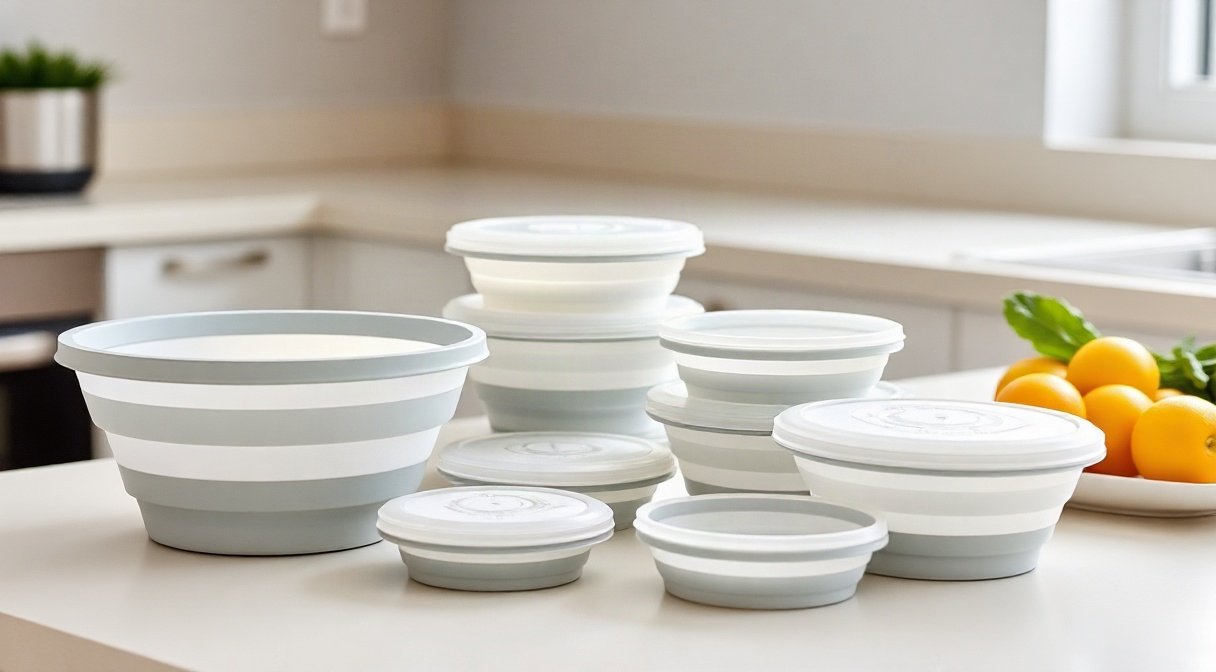
A nesting bowl set usually includes several capacities for snacks, lunch portions, and leftovers. Its biggest advantage is versatility: the smallest bowl can hold a side or a handful of berries, while a larger one can accommodate a meal. When the bowls collapse and stack together, they can reduce the jumble of mismatched plastic tubs in a crowded cupboard.
What it does well is cover everyday variety without requiring a separate container for every meal. A set can also make it easy to keep one size at work or in a travel bag. If the lids are standardized or stack neatly, the whole collection may be simpler to organize than a pile of unrelated containers.
The downside is that more pieces mean more lids to match, wash, and store. Bowls with deep folds can collect residue, and the shortest size may have little practical capacity after accounting for its rim. Nested pieces can also be less stable when stacked if the base is soft or the sides are uneven.
Buy it if: you want a general-purpose assortment for lunch, snacks, and leftovers, and you have room for a small stack of lids. Choose something else if: you mainly pack one large meal, dislike sorting multiple pieces, or need a rigid, highly secure container for liquids.
Pick 2: A Wide, Shallow Leftover Container
A shallow rectangular or square style is designed for food that benefits from a broad surface: cooked vegetables, sandwiches, slices of fruit, or dinner portions. Its shape can make food easier to see and serve. It may also fit refrigerator shelves more neatly than round bowls, depending on the shelf layout.
This style is good at turning a small storage footprint into a practical lunch container. A broad base can feel steadier than a tall collapsible bowl, and its lower profile may slide under a refrigerator shelf. If the sides fold down cleanly, it can be a convenient everyday option when cupboard height is limited.
Its limitations are capacity and shape. A shallow container is not ideal for tall foods or generous servings of soup, and corners may need extra attention during cleaning. Some lids add more bulk than the collapsed base, so inspect the complete stored dimensions rather than judging the silicone body alone.
Buy it if: your meals are mostly solid, shallow, and easy to arrange in a lunch bag. Look elsewhere if: you need a deep bowl, want one container for liquids and solids, or prefer a design that can be packed without worrying about pressure on a soft lid.
For either style, compare the lid’s closure and the manufacturer’s care instructions before choosing. A set can look like a smart space saving kitchen organization solution yet still disappoint if its pieces are awkward to clean or if the lids do not suit your commute. Treat capacity, storage dimensions, and closure as equally important checks.
Best Options for Travel and Meal Prep
Travel meal prep asks more of a container than cupboard storage does. It has to fit into a packed bag, tolerate handling, and keep food secure during the trip. A foldable food container set can reduce the space you carry home after lunch, but the soft sides and lid design matter. These two styles target different travel routines, and neither is an automatic substitute for a rigid travel container.
Pick 3: A Compact Lunch Bowl With a Secure Rim
A compact bowl with a lid that grips around the rim can work well for grain bowls, chopped vegetables, and other meals that do not need to be carried upside down. It gives you a familiar eating shape and can collapse after the meal, which is handy for commuters and day trips. A wide opening also makes it easier to eat from than a narrow, tall container.
Its strongest point is convenience after use. Instead of bringing home a rigid bowl that takes up the same volume whether full or empty, you can flatten the flexible body and pack it away. Some models also work as a serving bowl at a picnic or shared meal, subject to the product’s care and temperature instructions.
The trade-off is that a secure rim is not the same thing as a guaranteed liquid seal. Soft sides may buckle when squeezed between heavier items, and a lid can pop loose if the container is overfilled. For travel, place it upright in a separate washable pouch and avoid packing it beneath hard objects unless the maker specifically describes it as suitable for that use.
Buy it if: you carry mostly solid meals and want a reusable bowl that packs down after eating. Choose another style if: your bag gets tossed around, you carry thin soups, or you need to pack the container under pressure.
Pick 4: A Tall, Soup-Friendly Collapsible Bowl
A taller bowl gives more room for pasta, stew, or a generous portion of leftovers. Its deep shape can make it useful for batch-prepped meals, and a wide mouth helps with filling and washing. If it collapses to a short stack, it can be a practical choice for a kitchenette, dorm shelf, or travel kit where cupboard space is at a premium.
Its main advantage is capacity in a relatively compact stored form. It may handle meals that shallow lunch containers cannot, and the taller walls can help keep food contained while you eat. A thoughtfully designed base can also stay stable on a table when fully expanded.
However, tall soft walls can be easier to press inward, especially when the container is full. The folds can be harder to scrub than a smooth, straight-sided bowl, and a lid that merely rests on the top may not be appropriate for a liquid-filled bag. Check the manufacturer’s claims instead of relying on the appearance of a tight fit.
Buy it if: you need more depth for solid or thick meals and can carry it upright. Pick something else if: you frequently transport broth, want quick cleaning, or need a stack that fits into a very flat drawer.
Before travel, test the container at home with the type of meal you plan to carry. Follow its stated instructions, close the lid carefully, and keep liquids upright in secondary containment. A little preparation is more reliable than assuming a collapsible design will behave exactly like a hard-sided, gasket-sealed lunch box.
For food handling, use trustworthy guidance alongside the product manual. The USDA’s advice on leftovers and food safety covers prompt refrigeration and safe handling; a container’s compact design does not replace those basics.
Cleaning, Safety, and Long-Term Use
Silicone’s flexibility can make a container easy to compress, but its folds deserve careful cleaning. Food particles and oils may cling in creases, particularly after meals with sauces. Rinse soon after use, open the container fully, and wash along the folds rather than wiping only the smooth base. If the product is dishwasher-safe, follow the maker’s placement and temperature directions; otherwise, use the recommended hand-washing method.
Drying is just as important. Leave the container fully expanded and allow the folds to air-dry before collapsing it for storage. Trapped moisture can create unpleasant odors and make a clean container seem stale. If a smell remains, consult the manufacturer’s care guidance rather than using an abrasive scrubber or harsh treatment that could damage the surface.
Material claims deserve a careful read. A container may have a silicone body but a lid, valve, or reinforcing element made from another material. Check the product description and any use limitations, especially if you plan to heat or freeze food. The FDA overview of food-contact substances explains the role of substances used in food packaging and contact applications; it is useful background, not a substitute for instructions for a particular product.
Do not assume that a container is oven-safe, microwave-safe, or freezer-safe just because it is flexible. Follow the maker’s guidance for the body and lid separately. When microwaving is permitted, loosen or remove the lid as instructed, avoid overheating food, and use care when handling hot contents. A soft container may be harder to grip when it is full and warm.
Wear and tear can affect everyday usefulness. Check for cuts, tears, warped lids, or a closure that no longer holds. If the walls become damaged or the lid stops fitting as intended, stop using the piece for the job it can no longer perform safely. A heavily stained surface may still be usable if intact and clean, but follow the maker’s replacement and care advice.
For long service, avoid forcing folds in the wrong direction or storing heavy items on top of a compressed container if its instructions warn against it. Collapse it along its intended creases, and keep lids together so they do not get bent or lost. These small habits help a foldable food container set remain convenient rather than turning into a collection of misshapen pieces.
The key review takeaway is that care requirements are part of the product, not an afterthought. A design that saves cupboard space but takes too long to clean may not be a good daily fit. If your household prefers hard-sided pieces that stack rigidly, compare options in our review of a ceramic skillet with a lid for another example of how shape and cleaning needs affect kitchen choices.
Which Set Is Worth Buying for Your Routine?
There is no single best container style for every small kitchen. The useful choice depends on where the space problem happens: inside a cupboard, in a lunch bag, in a shared refrigerator, or in a travel kit. Before buying, measure the storage area and list the meals you want to pack. Then compare expanded capacity, compressed height, lid storage, and cleaning requirements side by side.
| Style | Best suited to | Main advantage | Main compromise |
|---|---|---|---|
| Nesting multi-size bowls | Mixed snacks and leftovers | Several serving sizes in one stack | More lids and pieces to manage |
| Wide, shallow container | Lunches and solid leftovers | Easy access and a low profile | Limited depth for bulky meals |
| Compact lunch bowl | Commuting and day trips | Useful eating shape that packs down | May need upright, careful carrying |
| Tall meal-prep bowl | Large or deeper portions | More room when expanded | Creases can take more cleaning |
| Single compact container | Minimalists and occasional use | Simple to store and keep track of | Less flexible than a coordinated set |
Choose a set if you routinely pack different portion sizes and will use most of the pieces. A smaller set is often easier to organize and less likely to leave unused lids in a drawer. If you already own reliable rigid containers, consider adding just one collapsible bowl for the specific situation where reducing empty-container bulk matters.
For a very small kitchen, prioritize the complete stored footprint. A product may collapse dramatically but still need a wide shelf for its lid or a separate place for accessories. Check whether pieces stack when collapsed, whether lids nest, and whether the stack stays stable. Those details make a real difference in space saving kitchen organization.
For frequent travel, focus on closure security and how you will carry the container, not just its folded size. Look for explicit manufacturer guidance on leak resistance and temperature use. If you carry liquids, compare it with a rigid, gasket-sealed option and decide whether the space saved is worth the added need to pack upright.
For daily meal prep, consider how easy it is to expand and clean. A smooth, broad shape may get more use than a technically smaller container with deep ridges. Verify capacity and dimensions using the product listing, and check current customer feedback for recurring comments about lids, odors, stability, or cleaning. Reviews are most useful when they describe a specific routine like yours.
In short, collapsable silicone storage containers are a practical category when cupboards or travel bags are tight, but they are not a universal replacement for rigid boxes. The best choice is the one whose open size, folded profile, and closure match your actual food and storage habits. Avoid paying for extra shapes you do not need, and treat marketing claims as something to verify against the product details.
Frequently Asked Questions
Are collapsible silicone containers genuinely space-saving?
They can reduce the height or volume of the container body when it is empty, which helps in crowded drawers and travel bags. The actual saving depends on the lid, shape, and whether the pieces nest. Compare the full stored dimensions rather than the collapsed body alone. A rigid lid or non-nesting set can reduce the benefit.
Can I carry soup in a collapsible container?
Only if the product’s manufacturer says its lid and construction are suitable for liquids and the way you plan to carry it. A lid that covers food in the refrigerator may not be leakproof in a backpack. When in doubt, transport it upright inside a secondary sealed pouch or choose a rigid container designed for liquids.
Are all parts safe for the microwave or dishwasher?
No. The body, lid, and any valve or insert can have different care limits. Read the instructions for the exact product and follow any guidance about removing the lid, positioning the container, or avoiding certain temperatures. Do not infer microwave, oven, freezer, or dishwasher safety from the word “silicone” alone.
How do I prevent odors in the folds?
Wash the container soon after use, open each fold fully, and remove oils or food residue from creases. Let it dry completely before collapsing it for storage. If odor persists, check the maker’s cleaning advice and avoid unapproved harsh cleaners or abrasive tools that could damage the surface.
Should I buy a set or one container?
A set makes sense when you regularly need different capacities and have room to store the lids. A single container may be the smarter choice if you have one clear use, such as packing lunch or saving cupboard height. Choose by routine rather than piece count; unused pieces add clutter instead of solving it.
What should I check before ordering online?
Look for expanded and collapsed dimensions, stated capacity, lid details, material information, and care instructions. Read reviews for specific reports about folding, closure, stability, and cleaning. Confirm what the set includes and whether lids fit every size. That information is more useful than a product photo that shows only the container from one angle.
Conclusion: Pick the Shape You Will Actually Use
The right collapsable silicone storage containers can make small kitchens easier to manage and lighten the load after travel meals. Compare the complete stored size, practical capacity, lid security, and cleaning routine before choosing. A nesting set suits varied portions, while one well-matched bowl may serve a focused routine better.
Measure your shelf or bag, check the manufacturer’s instructions, and choose the pieces that solve a real storage problem. For a compact, versatile setup, start with a small foldable food container set rather than buying more shapes than you need. That is a simple route to space saving kitchen organization without adding unnecessary clutter.