A backyard screen can turn an ordinary evening into an event, while a projector at camp can make a relaxing night feel special. But a projector that looks bright in a dark bedroom may disappoint outdoors, and a built-in battery does not guarantee a full-length movie.
This guide compares four portable models through the details that matter outside: rated brightness, battery claims, portability, and setup features. The best portable projector for camping depends on whether you value a brighter picture, longer untethered runtime, or a smaller packable design. This is a practical comparison of published specifications and real-world setup considerations, not a claim of laboratory or personal field testing.
How We Compared Portable Projectors for Camping
Outdoor projection asks more of a projector than an indoor movie does. There may be no convenient outlet, the screen may not be perfectly flat, and ambient light can remain long after sunset. We therefore compared models on four practical questions: how much light they claim to produce, whether they include a battery, how easily they can be positioned, and what compromises a buyer should expect.
Brightness figures deserve careful reading. Manufacturers may use ANSI lumens, ISO lumens, or other measurements, and those figures are not always directly interchangeable. Even a legitimate rating cannot guarantee a particular outdoor image: screen size, image settings, distance, and nearby lights all affect perceived brightness. Treat the numbers as a useful guide to relative suitability, not a promise that a projector will look vivid in a lit yard.
For battery performance, we distinguish manufacturer-stated runtime from a guaranteed movie session. Power-saving picture modes can stretch runtime, but they may reduce brightness. Streaming over Wi-Fi, playing through the built-in speaker, and using a brighter picture mode can also change how long a charge lasts. The mini projector battery life question is therefore partly about your habits and partly about whether you can bring backup power.
Setup is another major part of the comparison. Autofocus and automatic keystone correction can save time, but they cannot fix every placement problem. A projector still needs a stable surface, a suitable throw distance, and a clear path to the screen. A tripod socket or flexible stand can make a small projector easier to aim than a larger model with a less convenient mounting arrangement.
Our shortlist reflects different outdoor priorities rather than a single winner for everyone:
- Anker Nebula Mars 3: A rugged, brighter option with a built-in battery and a substantial body.
- XGIMI Halo+: A portable 1080p model that balances brightness, automatic setup, and battery convenience.
- Anker Nebula Capsule 3 Laser: A compact laser model for travelers willing to trade brightness for easy packing.
- Epson EpiqVision Mini EF12: A compact home projector with strong stated brightness, but no built-in battery.
That variety matters. The best portable projector for camping for a site with a power bank or vehicle outlet may not be the right pick for a remote tent site. Likewise, a backyard host with a nearby extension cord can prioritize image brightness over battery capacity. The sections below explain those differences instead of treating all portable projectors as interchangeable.
For a broader view of what to check before buying a projector, see Wirecutter’s projector buying guidance. For manufacturer-stated specifications, compare the Nebula Mars 3 product details with the model information in this guide.
Best Portable Projector for Camping: Four Model Matchup
These four picks cover different ways of taking a movie outside. The table focuses on the practical distinctions, not price or a lab-tested ranking. Brightness and runtime are manufacturer-stated figures, and actual results can vary with mode, content, audio, temperature, and device condition.
| Model | Rated brightness | Battery | Outdoor strength | Main compromise |
|---|---|---|---|---|
| Anker Nebula Mars 3 | Up to 1,000 ANSI lumens | Built in; manufacturer claims up to 5 hours | Brighter, rugged design, integrated audio | Bulky compared with pocket models |
| XGIMI Halo+ | Up to 900 ANSI lumens | Built in; roughly 2.5 hours stated | Automatic image setup and portable form | Runtime can be tight for longer films |
| Nebula Capsule 3 Laser | 300 ANSI lumens | Built in; roughly 2.5 hours stated | Small cylinder, easy to pack | Needs a very dark viewing area |
| Epson EpiqVision Mini EF12 | Up to 1,000 lumens of color and white light output | No built-in battery | Bright image and compact home setup | Requires an external power source |
Anker Nebula Mars 3: The more self-contained choice
The Mars 3 is a strong fit for users who want a more substantial all-in-one unit. Its rated brightness is among the highest in this group, and its built-in battery avoids the need to run a cable for every screening. The rugged construction and integrated speaker make it convenient for a yard or established campsite. Its claimed runtime is especially appealing for a long evening, though brightness and playback settings can affect actual endurance.
The trade-off is size and weight. This is not the model to choose if every item must fit into a small daypack. It also cannot make daylight projection look good; even a brighter portable projector benefits greatly from waiting until dark. Buy something else if pocketable portability is your priority.
XGIMI Halo+: The convenience-focused middle ground
The Halo+ combines a 1080p picture with automatic focus and keystone features that can reduce fiddling when the projector is moved. Its rated output makes it more adaptable than a dim pocket model once the sky is dark. The built-in battery helps when outlets are unavailable, and its compact shape is easier to transport than a larger rugged unit.
Its stated battery runtime may not cover every long feature film with margin, especially if you want brighter settings. Choose another model if you need the longest untethered session or expect to watch in a space with lingering ambient light.
Nebula Capsule 3 Laser: The packability pick
The Capsule 3 Laser is appealing for its small, easy-to-carry design and built-in battery. It can suit a tent area or remote campsite where compact gear matters more than a large, bright picture. Its laser light source and streamlined form make it a convenient travel companion for dark conditions.
At 300 ANSI lumens, it is the least suited here to a large outdoor screen or a yard with stray light. It is not the right choice for viewers who want a bright, expansive picture or a big integrated sound experience. Pick it for portability, not maximum brightness.
Epson EpiqVision Mini EF12: The outlet-friendly option
The EF12 offers a compact home-projector format and substantial stated light output, making it worth considering for a backyard with reliable power. Its sound and smart functions can help simplify a fixed outdoor setup. However, the lack of a built-in battery changes its role: it is portable to move, but not self-powered for a remote campsite.
Buy something else if you need battery operation without an external power station. For more on published specifications, review Epson’s EF12 product documentation.
Brightness Outdoors: What the Numbers Mean
Brightness is often the first specification shoppers compare, but it is easy to overestimate what any portable model can do in a backyard. A projector needs darkness to create convincing contrast. Porch lights, nearby windows, streetlights, and a bright twilight sky all wash out the image. Waiting until full darkness can improve the picture more than choosing a slightly higher-rated projector.
Among these options, the Mars 3 and EF12 have the strongest headline output figures, though their ratings are expressed differently and their power arrangements differ. The Halo+ is a middle-ground battery model, while the Capsule 3 Laser is designed around portability rather than high brightness. For the best portable projector for camping, consider the screen size you actually plan to use: a modest image in deep shade can look more satisfying than stretching a dim image across a very large screen.
Screen material and placement matter too. A dedicated projector screen can provide a smooth surface and more consistent viewing than a bedsheet, which may ripple in a breeze. A light-colored, taut sheet can still work for a casual screening, but its texture and folds may be visible. Keep the screen away from direct light and avoid placing the audience where a lamp shines toward the image.
Use these guidelines when interpreting brightness claims:
- Plan for darkness: Start the film after dusk, and turn off nearby exterior lights where it is safe to do so.
- Keep the image sensible: A smaller image is usually easier to watch when projector output is limited.
- Check the measurement: ANSI and ISO lumen figures are different test standards, so avoid treating them as perfectly equivalent.
- Expect mode trade-offs: Eco settings can extend battery runtime but may dim the image.
- Test your screen position: A clear, shaded location usually helps more than projecting onto a surface facing a light source.
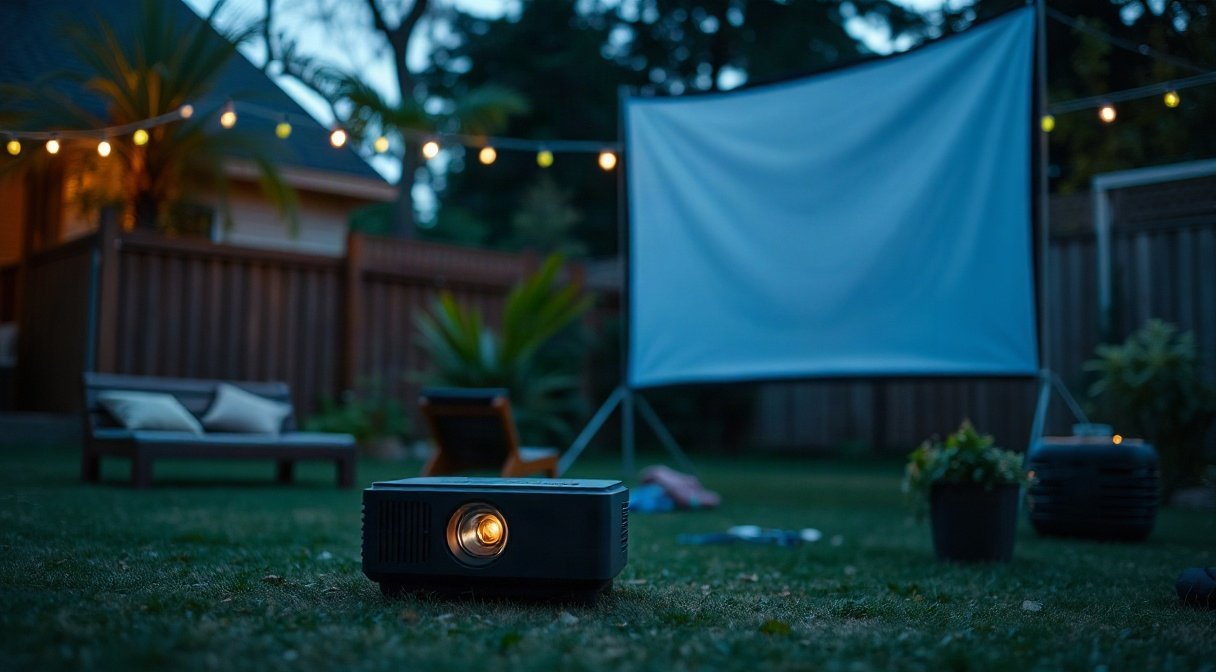
For a backyard outdoor movie night setup, the brightest model is not automatically the best overall choice. The Mars 3 may appeal if you want a brighter, battery-powered unit and can accommodate its larger body. The EF12 can suit a yard where an outlet or power station is already part of the plan. The Halo+ offers a useful balance for users who value automatic positioning and battery use. The Capsule 3 Laser makes sense when its compactness is more important than image size.
Set expectations around viewing conditions rather than marketing language. A projector that performs well in a dark room can still struggle before the sky is fully dark. If your group prefers an earlier start, you may need a smaller screen, more shade, or a model with stronger output. If you regularly host large gatherings, a mains-powered projector may be a better match than a tiny battery model.
Brightness also affects the experience of the audience, not just the image. A screen positioned too high can be uncomfortable from low camping chairs, and a large bright image may feel imposing at close range. Arrange seating first, then choose the screen size and projector position that suit the viewing distance.
Mini Projector Battery Life and Power Planning
Battery runtime can decide whether a campsite movie ends with the credits or with a low-power warning. Manufacturer claims provide a useful starting point, but they usually describe particular conditions. Picture mode, speaker volume, wireless streaming, temperature, battery age, and the projector’s workload can all affect how long it runs. Treat any stated runtime as an estimate to plan around, not a guarantee.
The Mars 3 stands out on paper with a manufacturer-stated runtime of up to five hours. That gives it more breathing room for a feature and some setup or menu time, though the longest claim may require power-conscious settings. The Halo+ and Capsule 3 Laser are commonly specified for about two and a half hours. That can cover a short movie, but a long film, pre-show browsing, or a second feature may call for a charging plan.
Built-in battery capacity is only one part of the decision. The EF12 has no internal battery, so it needs mains power or a compatible external power solution. This makes it less convenient for remote camping, but it can be perfectly practical in a backyard with a safe outdoor outlet. A portable power station can bridge the gap, but check its output compatibility and usable capacity before relying on it.
Before you leave home, make a simple power plan:
- Check the film length. Include time for menus, trailers, and setup rather than calculating only the feature runtime.
- Charge fully. Confirm the battery indicator and bring the correct charging cable or adapter.
- Choose a sensible picture mode. Use a brighter mode only when conditions require it; an eco mode may conserve power.
- Plan audio separately. High speaker volume can affect power use, while a separate speaker introduces another device to charge.
- Keep backup power accessible. Verify that any power bank or station can provide the required output before departure.
The mini projector battery life comparison should also account for how you watch. Downloading content in advance can avoid relying on a weak campsite connection, though wireless streaming convenience may be important at home. Keep the projector ventilated and follow its instructions; do not cover air vents to protect it from dust or dew. Cold conditions may affect battery behavior, so check the manufacturer’s operating guidance for the conditions you expect.
For a remote trip, the best portable projector for camping is usually the one whose realistic runtime matches your movie plan, not the one with the most impressive headline claim. If you regularly watch long films, favor greater runtime or carry a suitable power source. If your sessions are short, a smaller projector may be adequate. In a backyard, an extension cord can remove battery anxiety, but use outdoor-rated equipment and keep connections protected from moisture.
Be mindful of sound and neighbors as well. A built-in speaker reduces gear, but it may not fill a large yard at comfortable volume. A Bluetooth speaker can improve sound, yet adds pairing steps and its own battery needs. Test the complete setup before a trip so you know which devices need charging and whether audio remains synchronized.
Outdoor Movie Night Setup: Screen, Placement, and Weather
A reliable outdoor movie night setup starts before the projector is switched on. Choose a level, dry location with enough distance between the projector and screen. Check the model’s throw-distance guidance, then make sure people will not walk through the beam. A stable table, tripod, or firm shelf prevents a small bump from shifting the image during the film.
Automatic focus and keystone correction can make setup faster, particularly when you move between a backyard and campsite. They are helpful features, not substitutes for good placement. Digital keystone correction reshapes the image and may reduce usable resolution, so aim the projector as squarely at the screen as possible. Autofocus can also need a moment to settle after you move the unit or change the projection surface.
Use this quick setup sequence:
- Position the screen on a taut, stable surface and keep it clear of direct light.
- Place the projector on a firm base at the recommended distance.
- Connect power and audio before making final framing adjustments.
- Focus the image, correct any minor geometry issue, and check that subtitles are legible.
- Run a short playback test, then lower nearby lights and settle the audience.
Weather deserves a place in the plan. Many portable projectors are not designed to sit in rain or heavy dew, and even a rugged casing does not make a device waterproof. Check the manufacturer’s protection rating and operating instructions. Bring the unit indoors when conditions turn wet, and do not wrap it in a cover while it is running if that blocks ventilation.
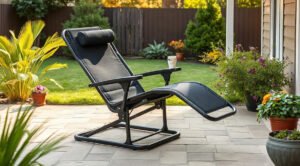
Sound, seating, and snacks complete the experience. Built-in speakers are convenient for a small group, but a separate speaker can help in a larger open space. Pair it before guests arrive, then check audio delay with actual video. Comfortable seating can make a longer screening much more enjoyable; see these oversized zero-gravity chair comfort picks if you are planning a relaxed backyard viewing area.
Food can be part of the evening, too, but keep cooking equipment well away from screens, cables, and the projector. If your event includes an outdoor meal, our guide to backyard outdoor pizza ovens offers ideas for planning the cooking side separately from the viewing area.
For camping, simplify rather than trying to recreate a full home theater. Pack only the cables you need, secure the screen against wind, and use downloaded content when connectivity is uncertain. Keep the projector away from foot traffic and protect it from dust when it is off. A small kit with a charging lead, remote, and any needed adapter can prevent a last-minute search in the dark.
Good setup can make a modest projector feel more capable. A smaller screen in a dark, sheltered corner may be more enjoyable than a giant image in a bright, exposed area. When comparing the best portable projector for camping, consider how quickly you can create those conditions with the gear you already own. A projector that is easy to position and power is more likely to get used than one that looks impressive only in a specification list.
FAQ: Choosing the Best Portable Projector for Camping
Can a portable projector work before it is completely dark?
It can display an image, but daylight and twilight reduce contrast and make the picture look washed out. Waiting until the sky is darker usually improves the experience more than making a small adjustment to screen size. If early viewing is important, choose a brighter model, reduce the image size, and find a shaded location.
Which model is the best portable projector for camping?
There is no universal winner. The Mars 3 is a compelling choice for buyers who prioritize a brighter, rugged, battery-powered design. The Halo+ balances portability with automatic setup features. The Capsule 3 Laser is easier to pack but is better suited to dark conditions and a modest image. The EF12 is more suitable where external power is available.
Will a built-in battery last through a full movie?
It depends on the movie length and how the projector is used. A manufacturer’s maximum runtime may not reflect brighter picture settings, loud audio, or time spent browsing. Check the stated runtime for your chosen model, add a buffer, and carry compatible backup power if the session is important.
Is a white sheet good enough for an outdoor screen?
A smooth, light-colored sheet can work for a casual screening if it is pulled taut and protected from wind. Folds and fabric texture may soften or distort the image. A dedicated screen generally offers a flatter surface, but the right choice depends on how often you watch and how much gear you want to carry.
Do automatic focus and keystone features matter outdoors?
They can save time when the projector is moved or set up on uneven ground. However, they do not replace a stable base and careful alignment. Aim the lens toward the center of the screen and minimize digital correction where possible. This helps keep the image geometry and clarity in better shape.
What should I check before using a projector at a campsite?
Confirm battery charge, movie length, available power, and the projector’s operating guidance. Bring a stable support, a screen or suitable surface, and any needed audio equipment. Check local rules and quiet hours, keep gear dry and ventilated, and download viewing content in advance if internet access may be unreliable.
Conclusion: Match the Projector to Your Outdoor Plans
The strongest choice depends on what you value most. Choose the Mars 3 for a more self-contained, brighter outdoor setup; the Halo+ for convenient automatic adjustment; the Capsule 3 Laser for compact packing; or the EF12 when nearby power is available. Compare stated brightness and battery claims with your actual screen size, movie length, and viewing conditions.
For the best portable projector for camping, prioritize a realistic power plan and a dark, stable viewing area over headline numbers alone. Pick the model that suits your trips, test your outdoor movie night setup at home, and confirm the mini projector battery life is enough for your planned screening before you head out.