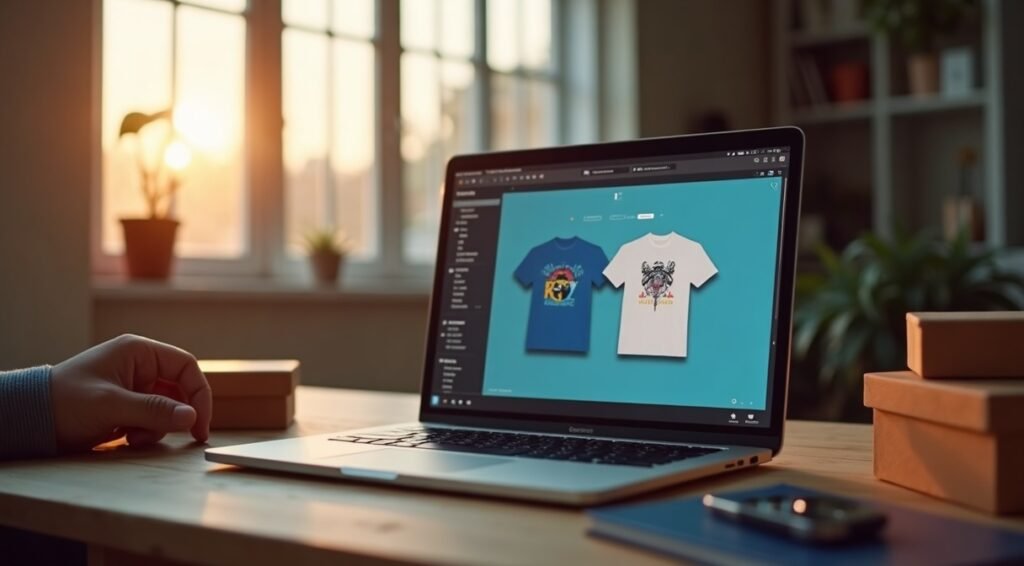

Print on demand has transformed how entrepreneurs launch e-commerce businesses without inventory risks. This fulfillment model lets you sell custom-designed products only after customers place orders, eliminating upfront costs and storage headaches. Whether you are starting your first side hustle or scaling an existing brand, understanding the fundamentals of print on demand will determine your success in this competitive marketplace.
How Print On Demand Works for New Entrepreneurs
The print on demand model operates through a simple three-step process. First, you create designs and upload them to products through a platform or supplier. Second, you market those products through your own storefront or marketplace listings. Third, when customers purchase, your supplier prints, packs, and ships directly to the buyer.
This hands-off fulfillment method offers distinct advantages over traditional retail:
- Zero inventory investment – Pay only for products sold
- Unlimited product variations – Test hundreds of designs without financial risk
- Scalable operations – Handle ten or ten thousand orders with equal effort
- Global reach – Access worldwide printing networks and shipping infrastructure
The primary trade-off involves lower profit margins compared to bulk manufacturing. However, the reduced risk profile makes print on demand ideal for testing markets and building brands before committing to larger production runs.
Best Print On Demand Platforms Compared
Platform selection significantly impacts your product quality, profit margins, and operational flexibility. Each major provider serves different business models and experience levels.
Printful: Best for Brand Building
Printful leads the market with superior print quality and extensive branding options. Their mockup generator produces professional product images, while their warehousing service lets you stock bestsellers for faster shipping. Integration spans Shopify, WooCommerce, Etsy, Amazon, and fifteen additional sales channels.
Pricing runs higher than competitors, making Printful ideal for premium positioning rather than budget markets.
Printify: Best for Profit Margins
Printify operates as a network connecting you to multiple printing partners rather than owning facilities. This model delivers competitive base costs, particularly on apparel and home goods. Their premium subscription unlocks 20% discounts, substantially improving margins at scale.
Quality consistency varies between providers, requiring test orders before scaling specific products.
SPOD (Spreadshirt): Best for Fast Shipping
SPOD prioritizes speed with 95% of orders produced within 48 hours and industry-leading shipping times. Their European and US facilities serve major markets efficiently. The trade-off involves a more limited product catalog focused on apparel and accessories.
Gelato: Best for Global Reach
Gelato maintains production facilities across 32 countries, reducing international shipping costs and delivery times. Their localization features support multi-currency and multi-language storefronts. Sustainability certifications appeal to environmentally conscious consumers.
Redbubble, Society6, TeePublic: Best for Beginners
Marketplace platforms handle storefront setup, traffic generation, and customer service. You simply upload designs and collect royalties. These work well for passive income but offer limited brand control and lower per-unit earnings than self-hosted stores.
Most successful sellers eventually migrate to hybrid models, maintaining marketplace presence while building independent storefronts through Shopify for higher margins and customer ownership.
Profitable Niche Selection Strategies
Niche selection separates thriving print on demand businesses from struggling generalists. Broad audiences like “dog lovers” or “fitness enthusiasts” face crushing competition. Specific, passionate subcultures generate sustainable profits.
Effective niche evaluation considers three factors:
- Audience passion intensity – Do people build identity around this interest?
- Keyword commercial intent – Are people actively searching to buy related products?
- Design differentiation potential – Can you create distinctive visual expressions?
Research Methods for Validating Niches
Start with Reddit communities, Facebook groups, and Discord servers where your target audience congregates. Note recurring jokes, frustrations, and identity markers. These raw conversations reveal design concepts that resonate authentically.
Amazon and Etsy search analysis reveals commercial demand. Look for products with steady sales but mediocre designs. Tools like Everbe, Alura, or manual review counting identify underserved segments.
Google Trends validates seasonal patterns and emerging interests. Rising search terms indicate growing markets before saturation hits.
Proven Niche Categories for 2024
Current high-opportunity niches include:
- Hyper-specific professions – Not nurses, but pediatric ICU nurses working night shifts
- Micro-hobbies – Bonsai cultivation, mechanical keyboard building, disc golf
- Identity intersections – Vegan bodybuilders, introverted entrepreneurs, rural remote workers
- Localized pride – Small town-specific designs outperforming generic state merchandise
The most profitable sellers own multiple related niches, cross-selling between audiences and building email lists for launch momentum on new designs.
Design Tips That Drive Sales
Design quality directly determines conversion rates and return customer rates. Professional aesthetics matter, but emotional connection drives purchase decisions.
Technical Fundamentals
Resolution requirements vary by product but generally demand 300 DPI at print size. Vector formats (AI, EPS, SVG) scale infinitely without quality loss. Raster files (PNG, JPEG) work for photography-based designs but require sufficient pixel dimensions.
Color profiles cause frequent disappointment. Screen displays use RGB; most printers use CMYK or specific garment color systems. Order physical samples before large launches to verify appearance.
Conversion-Focused Design Principles
Successful print on demand designs follow consistent patterns:
- Immediate recognition – Clear meaning within three seconds of viewing
- Conversation starters – Designs that prompt questions or comments when worn
- Inside jokes – References that signal belonging to specific communities
- Typography hierarchy – One dominant element with supporting details
Mockup presentation equally impacts sales. Lifestyle photography outperforms flat lays. Models representing your actual target demographic build trust. Multiple product angles and detail shots reduce purchase hesitation.
Scaling Design Production
Profitable operations require systematic content creation. Successful approaches include:
- Hiring niche-specialist designers through Cramzon and similar platforms
- Developing template systems for rapid variation production
- Building feedback loops through social media polling and A/B testing
- Creating seasonal design calendars for predictable revenue patterns
Quality control processes prevent costly errors. Implement checklist reviews for spelling, alignment, and color accuracy before any design enters production.
Marketing and Scaling Your Print On Demand Store
Traffic generation determines survival regardless of design quality. Organic and paid channels each serve specific business stages.
Organic foundations include Pinterest optimization for product discovery, TikTok content featuring design creation processes, and Instagram community building through niche hashtag strategies. These require 6-12 months for meaningful results but deliver sustainable customer acquisition costs.
Paid advertising accelerates validation and scaling. Facebook and Instagram ads dominate for impulse purchases under $50. Google Shopping captures high-intent searches. TikTok ads offer currently underpriced attention for younger demographics.
Email marketing delivers highest lifetime value. Capture subscribers through quiz lead magnets, early access programs, or design voting participation. Segment by purchase history and engagement for personalized campaigns.
Operational scaling requires attention to profit margins rather than gross revenue. Monitor contribution margin after product costs, platform fees, payment processing, and advertising spend. Suspend underperforming designs quickly and double investment in proven winners.
Common Mistakes to Avoid
New print on demand entrepreneurs consistently repeat predictable errors:
- Trademark infringement – Using protected phrases, logos, or characters destroys accounts and invites legal action
- Overdesigning – Crowded compositions confuse viewers and reduce wearability
- Ignoring shipping transparency – Unexpected delivery times generate refund requests and negative reviews
- Single-platform dependence – Algorithm changes or policy updates can eliminate income overnight
- Neglecting customer service – Print on demand quality issues require proactive resolution to protect reputation
Building sustainable print on demand income demands patience and systematic testing. Most successful sellers experimented through dozens of niches and hundreds of designs before finding profitable combinations.
Conclusion: Your Path to Print On Demand Success
Print on demand offers genuine business opportunity for entrepreneurs willing to research thoroughly, design strategically, and market persistently. Success requires treating this as a real business rather than passive income fantasy.
Start with platform selection matching your technical skills and brand ambitions. Validate niches through community immersion before design investment. Build systematic creation and marketing processes rather than hoping for viral hits.
The entrepreneurs who thrive combine creative sensitivity with operational discipline. They understand their audiences deeply, deliver designs that resonate authentically, and scale methodically through data-driven decisions.
Ready to accelerate your print on demand journey? Visit Cramzon for expert resources, platform recommendations, and proven strategies to build your profitable e-commerce business.